
In today’s competitive e-commerce landscape, offering personalized products isn’t just a nice-to-have , it’s essential. Product configurator apps empower your customers to customize everything from colors and materials to complex product features, creating unique items that perfectly match their vision.
With the right configurator, you can dramatically boost engagement, increase average order values, and reduce return rates by helping customers visualize exactly what they’re buying.
Whether you’re selling custom apparel, furniture, jewelry, or complex made-to-order products, these 12 Shopify product configurator apps represent the best solutions available in 2026. Each offers unique strengths tailored to different business needs and product complexities.
Table of contents
- What is a Product Configurator?
- Why Your Shopify Store Needs a Product Configurator
- The 12 Best Shopify Product Configurator Apps in 2026
- Choosing the Right Product Configurator for Your Shopify Store
- Key Features to Look For
- Implementation Tips for Success
- The Future of Product Customization in 2026
- Conclusion
- Related Reading
- Frequently Asked Questions
What is a Product Configurator?
A product configurator guides customers through an intuitive, interactive process to design custom products within your offerings. Unlike simple customization (adding text or images), configurators enable comprehensive product building , selecting materials, components, colors, dimensions, and features to create made-to-order items. The best configurators provide real-time visual previews, dynamic pricing, and conditional logic to streamline complex customization workflows.
Why Your Shopify Store Needs a Product Configurator
Enhanced Customer Experience: Interactive customization is engaging and fun, transforming passive browsing into active product creation. Customers who design their own products develop stronger emotional connections to their purchases.
Increased Sales & Conversions: Studies show that product pages with 3D models and configurators can generate up to 250% higher conversion rates. Customers willingly pay premium prices for personalized products.
Reduced Photography Costs: Instead of photographing every possible variant, configurators dynamically render product combinations, saving significant time and money on photoshoots and sample production.
Fewer Returns: When customers can visualize their exact product before purchase, confidence increases and return rates drop significantly due to better-matched expectations.
Overcome Shopify’s Variant Limitations: Shopify caps products at 100 variants. Robust configurators bypass this limitation by managing complex configurations independently, enabling unlimited customization options.
Product configurators help customers visualize their purchases, but verified reviews seal the deal!
The 12 Best Shopify Product Configurator Apps in 2026
1. Kickflip
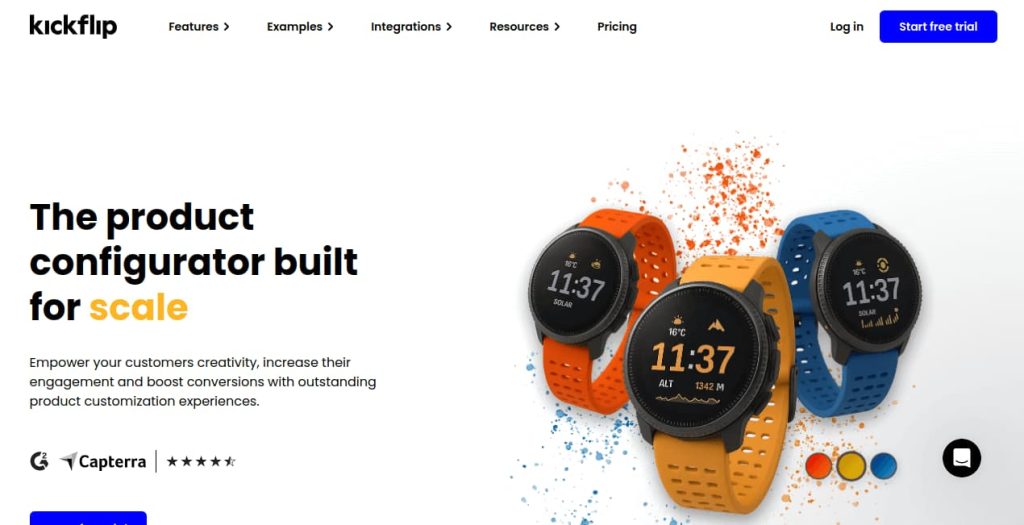
Best for: Businesses of all sizes seeking a user-friendly, powerful solution with unlimited customization options
Kickflip stands out as one of the most comprehensive and accessible product configurators available on Shopify. Its intuitive content management system allows you to build sophisticated customizers without writing any code, making it ideal for merchants who want professional results without technical expertise.
Key Features:
- Unlimited color variants, component options, and product configurations
- Real-time visual previews across multiple perspectives
- Powerful conditional logic to show/hide options based on selections
- Fully customizable themes matching your brand identity
- Responsive design optimized for desktop, tablet, and mobile
- Dynamic pricing engine that calculates costs based on selections
- Excellent customer support with quick response times
Pricing: Contact for pricing
Best For: Custom furniture, sporting goods, apparel, accessories, and any product with 5-200+ customization options
Kickflip’s strength lies in its balance of power and usability. Whether you’re creating simple color selectors or complex multi-component configurators, the platform scales to your needs while remaining accessible to non-technical users.
2. Custom Product Builder (CPB)
Best for: Complex products with thousands of possible variant combinations
Custom Product Builder excels at handling extremely complex configurations, supporting products with over 50 million possible variants. If you’re selling highly customizable products with extensive material, color, and feature options, CPB’s advanced capabilities make it the ideal choice.
Key Features:
- Advanced conditional logic for showing/hiding options
- Sophisticated pricing engine with Excel-like formulas for dimensions and weight
- Real-time color simulation and mockup generation
- Integration with Shopify inventory and SKU management
- Support for text, image, and file uploads
- Quantity and size breakdowns for wholesale orders
- Out-of-stock variant hiding
- Hybrid-generated price variants for Managed Markets compatibility
Pricing: Contact for pricing
Best For: Handcrafted products, custom furniture, apparel with extensive fabric options, and businesses requiring complex configuration logic
Users consistently praise CPB’s power and flexibility, though there’s a learning curve. The responsive support team helps merchants overcome initial setup challenges and maximize the platform’s capabilities.
Also Read:Top 5 Shopify Print on Demand Apps in 2025: Everything You Need to Know
3. Zakeke
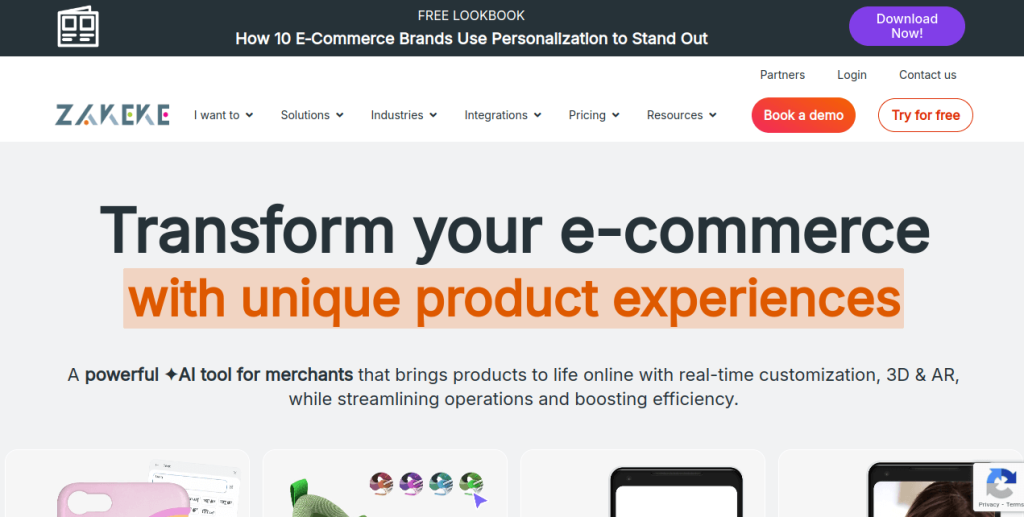
Best for: Stores wanting advanced 3D visualization, AR experiences, and virtual try-on capabilities
Zakeke transforms the shopping experience with cutting-edge visualization technology. This Italian company offers an elaborate solution including 3D rendering, augmented reality, and comprehensive customization options that create immersive shopping experiences.
Key Features:
- Real-time 2D and 3D product rendering
- Augmented Reality (AR) view for visualizing products in customers’ spaces
- Virtual Try-On technology for applicable products
- Text and image customization capabilities
- Multi-platform integration support
- Quick installation (under 10 minutes on Shopify)
- Professional-grade visualization quality
Pricing: Plans start at $29/month
Best For: Furniture, home decor, jewelry, eyewear, and products benefiting from 3D visualization and AR
Zakeke’s 3D capabilities require CAD files and 3D modeling expertise, so you’ll need access to 3D specialists or prepared models. However, the investment pays off with dramatically improved customer confidence and reduced returns.
4. Customify
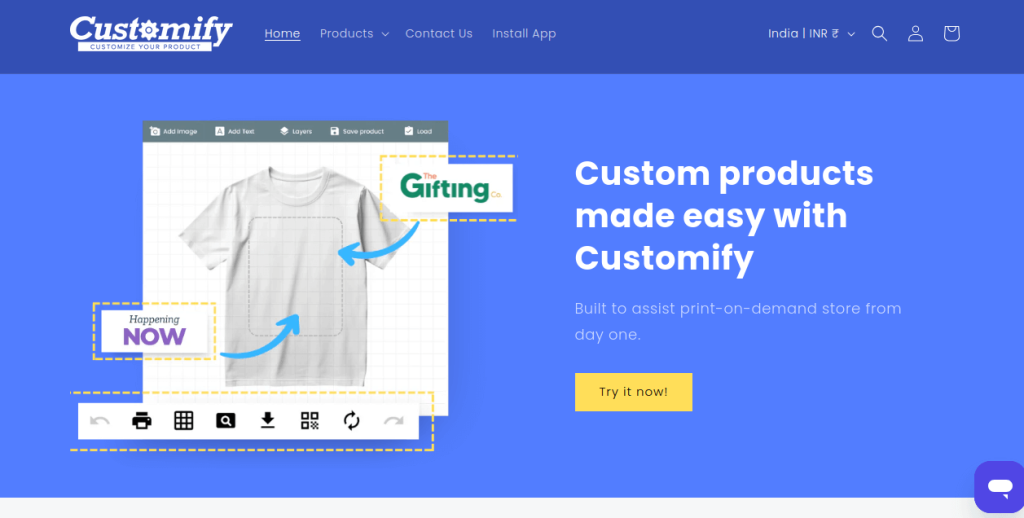
Best for: Print-on-demand businesses and stores selling visually personalized products
Customify provides a beginner-friendly yet powerful interface specifically designed for products requiring visual customization. Customers can upload images, add text, and work from templates to create personalized items with instant visual feedback.
Key Features:
- Drag-and-drop design interface
- Real-time visual previews showing changes immediately
- Unlimited image storage for customer uploads
- Save and return functionality for designs in progress
- Pre-designed templates to jumpstart creativity
- Responsive design working seamlessly across all devices
- Integration with major print-on-demand services
Pricing: Plans start at $19.99/month (Starter plan with 10 products)
Best For: T-shirts, hoodies, canvas prints, blankets, mugs, phone cases, and other printable products
Customify strikes an excellent balance between simplicity and functionality, making it accessible to beginners while offering enough power for professional operations.
Also Read: 13 Best Shopify Themes That Will Transform Your Online Store in 2025
5. Qstomizer
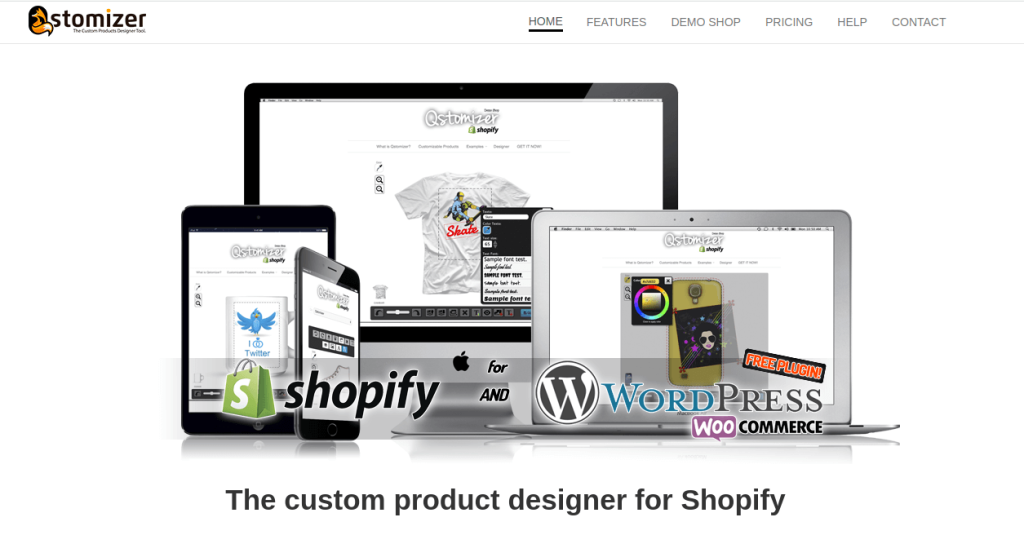
Best for: Multilingual stores and businesses requiring flexible pricing based on customization choices
Qstomizer shines with its international capabilities and sophisticated pricing options. The platform supports multiple languages with automatic recognition and translation, making it ideal for global operations.
Key Features:
- Visual configurator with live preview
- Advanced product options and quantity discounts
- Dynamic price generation based on customization choices
- Multiple printing method support (DTF, screen print, DTG, sublimation, embroidery)
- Automatic language recognition and translation
- Customizable pricing based on image size, shape, and color
- Text, photo, clipart, and logo upload capabilities
Pricing: Starter plan at $19.99/month
Best For: International stores, custom printing businesses, and products with complex pricing structures
Some users report technical issues and limited platform integrations, and the starter plan has functionality limitations, but the multilingual support and flexible pricing make it valuable for specific use cases.
6. Angle 3D
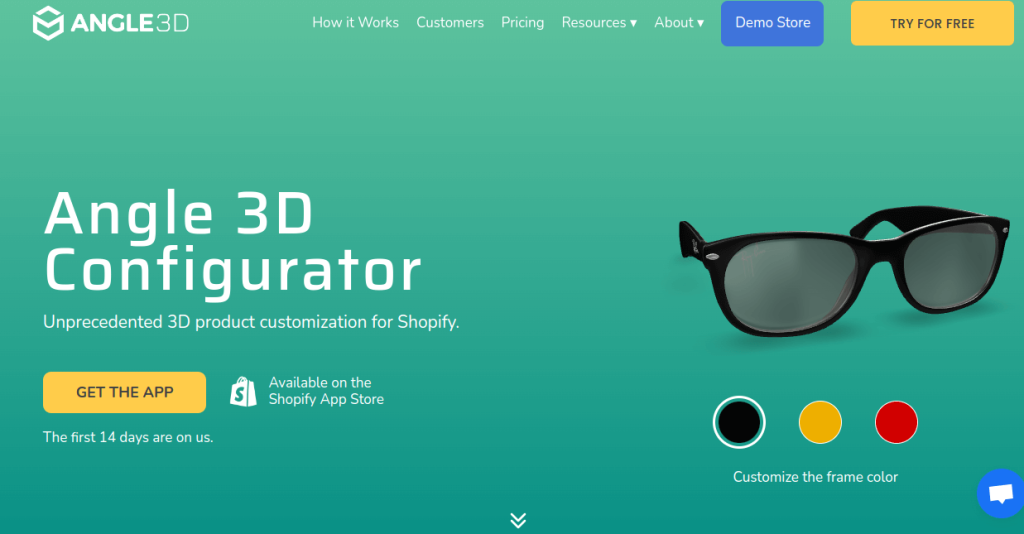
Best for: Getting started quickly with basic 3D configuration needs
Angle 3D represents an excellent entry point into 3D product configuration. Its plug-and-play approach means you can be up and running within an hour, provided you already have 3D models prepared.
Key Features:
- Simple drag-and-drop configuration setup
- Plug-and-play installation requiring minimal technical knowledge
- Supports basic color, texture, and visibility changes
- Augmented reality support with minimal setup
- Uncomplicated, easy-to-learn user interface
- Quick product template creation
- Affordable entry-level pricing
Pricing: Contact for pricing
Best For: Proof of concept projects, stores starting with 3D configuration, and products with straightforward customization needs
Angle 3D’s philosophy is that having a basic configurator is far better than having none. Start with your top 6-8 most-selected options and expand from there. The platform’s simplicity is both its strength and limitation—it “just works” without overwhelming complexity.
7. ShapeDiver
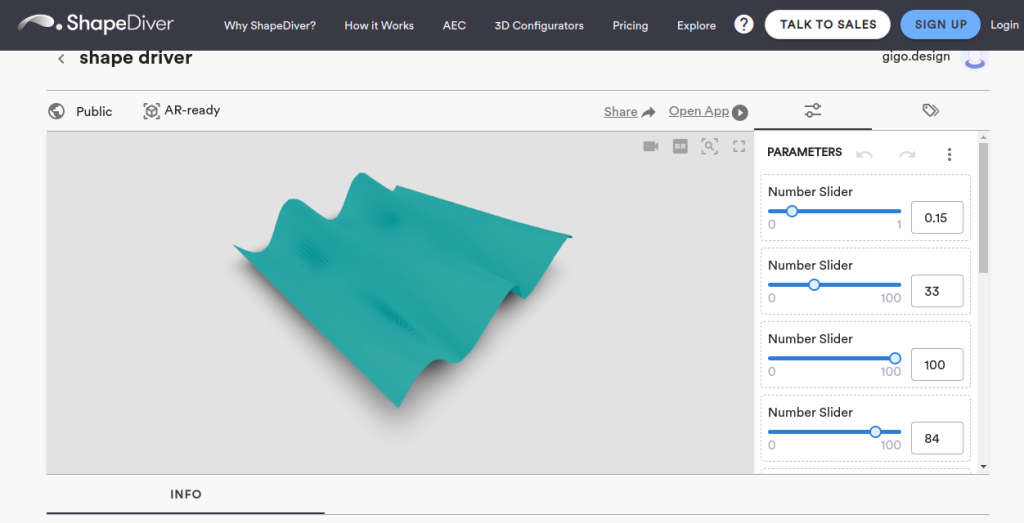
Best for: Advanced users requiring maximum power and flexibility with 3D parametric design
ShapeDiver represents the most powerful configurator tool available for Shopify, offering unmatched capabilities for complex parametric designs. While there’s a learning curve, the platform provides sophisticated control over 3D models and configurations.
Key Features:
- Advanced parametric 3D modeling capabilities
- Sophisticated control over model behavior and rendering
- Support for complex mathematical relationships between parameters
- High-quality visualization and rendering
- Extensive customization possibilities
- Professional-grade output quality
- Integration with Grasshopper and other parametric design tools
Pricing: Contact for pricing
Best For: Furniture configurators, architectural products, complex mechanical parts, and products requiring advanced parametric relationships
ShapeDiver’s power comes with complexity. You can keep implementation manageable by outsourcing model creation to specialists, bringing its difficulty in line with other enterprise solutions while retaining its superior capabilities.
8. W3 Custom Product Options
Best for: Maximum flexibility without sacrificing simplicity and live product preview capabilities
W3 Custom Product Options delivers unlimited customization possibilities with an accessible interface. The platform excels at providing live previews that update based on customer selections, helping visualize final products clearly.
Key Features:
- Unlimited product options without restrictions
- Live product preview updating in real-time
- Simple, intuitive interface for both merchants and customers
- Visual representation of customization choices
- Flexible option types including dropdowns, swatches, text fields, and uploads
- Conditional logic for showing/hiding options
- Clean product pages that maintain usability despite complexity
Pricing: Free plan available; paid plans for advanced features
Best For: Personalized gifts, custom products, engraving services, made-to-order items, and stores wanting to increase average order value
The combination of unlimited options and live preview functionality makes W3 particularly valuable for stores where visualization is critical to the purchase decision.
Also Read: 15 Best Shopify Upsell Apps for 2026
9. Easify
Best for: All-in-one solution handling both simple options and advanced personalization
Easify provides comprehensive customization capabilities in a single platform, eliminating the need to juggle multiple apps. From basic option sets to complex conditional logic, it handles diverse requirements smoothly.
Key Features:
- Comprehensive option types (text, image uploads, dropdowns, swatches, checkboxes)
- Advanced conditional logic showing/hiding options based on selections
- Works seamlessly with Shopify variants
- Add-ons and upsells to increase average order value
- Quantity-based pricing and discounts
- Clean interface maintaining usability with complex setups
- Integration with Shopify’s native features
Pricing: Free plan available with core features
Best For: Personalized gifts, print-on-demand, made-to-order items, stores with varied product types, and businesses seeking to consolidate multiple apps
Easify’s strength lies in versatility. Whether you need simple text engraving or complex multi-step configurations, a single platform handles everything efficiently.
10.Customily
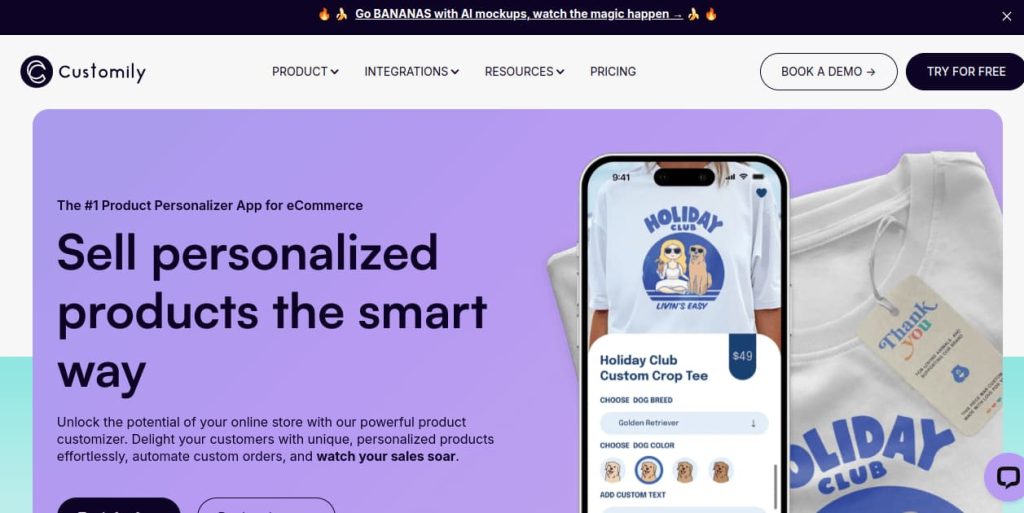
Best for: Print-on-demand businesses and stores selling personalized home decor and apparel
Customily empowers online businesses to sell premium personalized products across categories. From apparel to home decor, the platform provides tools specifically optimized for print-on-demand workflows.
Key Features:
- Live preview showing customizations in real-time
- Optimized for print-on-demand fulfillment
- Support for various product categories (apparel, canvas, blankets, home decor)
- User-friendly customization interface
- Integration with major POD services
- Product templates speeding up setup
- Quality assurance tools for print readiness
Pricing: Contact for pricing
Best For: T-shirt businesses, canvas art stores, custom blanket shops, mug sellers, and print-on-demand operations
Customily focuses specifically on POD workflows, providing specialized features that streamline the process from customization to fulfillment.
11. Expivi
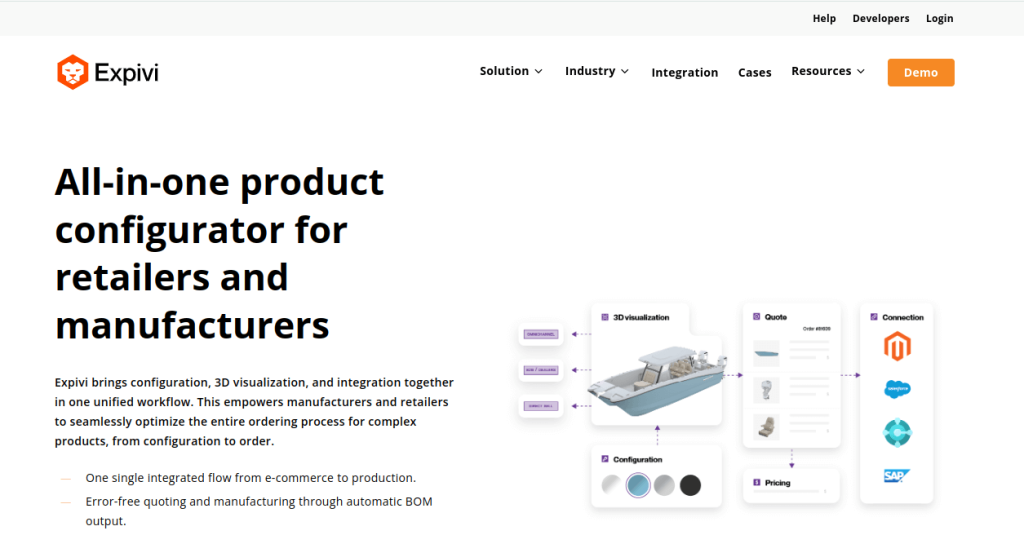
Best for: Enterprise-level businesses requiring white-glove service and custom implementation
Expivi offers a comprehensive solution delivered through a full-service approach. Rather than providing self-service tools, their team delivers your complete configurator project within 2-4 months, handling everything from design to implementation.
Key Features:
- Custom UI design based on your brand guidelines
- Professional project delivery and implementation
- Intensive design and kick-off strategy
- Custom product sales analytics
- Ongoing training and support
- Enterprise-grade features and performance
- Dedicated account management
Pricing: One-time onboarding fee plus monthly/annual licensing (contact for pricing)
Best For: Large enterprises, high-end product lines, businesses requiring custom features, and companies preferring turnkey solutions
Expivi’s service model suits businesses that want configurators built for them rather than building their own. The higher investment delivers professionally crafted solutions tailored precisely to your needs.
Also Read: Top 10 Shopify Analytics Apps: Track Performance and Boost Profits
12. Spiff 3D
Best for: Professional 3D product configuration with balanced complexity and capability
Spiff 3D provides sophisticated 3D configuration capabilities with a learning curve comparable to other enterprise solutions. It offers robust features for businesses ready to invest in premium configurator technology.
Key Features:
- Advanced 3D visualization and rendering
- Real-time product preview updates
- Support for complex product configurations
- Material and component selection
- Quality rendering for customer confidence
- Integration capabilities with e-commerce platforms
- Professional implementation support
Pricing: Contact for pricing
Best For: Furniture retailers, home goods stores, custom manufacturing, and products benefiting from 3D visualization
Spiff 3D balances power with approachability, sitting between basic configurators and highly complex parametric tools. It provides enterprise-grade features without overwhelming complexity.
Choosing the Right Product Configurator for Your Shopify Store
Selecting the perfect configurator depends on several critical factors:
- Product Complexity: Simple text personalization needs different tools than complex multi-component configurations with thousands of variants.
- Technical Expertise: Consider whether you have developers available or need no-code solutions. Apps like Kickflip and Customify excel with user-friendly interfaces, while ShapeDiver and CPB reward technical investment.
- Budget Considerations: Entry-level options like Angle 3D and Customify start around $20/month, while enterprise solutions like Expivi and Spiff 3D require significant investment but deliver white-glove service.
- 3D Requirements: If your products benefit from 3D visualization or AR, prioritize Zakeke, Angle 3D, ShapeDiver, or Spiff 3D. For 2D visualization, simpler options work perfectly.
- Setup Time: Some apps offer quick setup (Angle 3D, Customify), while others require substantial configuration time (CPB, ShapeDiver) but provide greater long-term flexibility.
- Conditional Logic Needs: If your products require complex rule-based configurations, CPB and Kickflip provide the most sophisticated conditional logic engines.
Key Features to Look For
When evaluating configurators, prioritize these essential capabilities:
- Content Management System: Full control to build and maintain configurators without constantly hiring developers. Kickflip and CPB excel here.
- Live Visual Preview: Customers must see their design evolve in real-time. This dramatically reduces purchase hesitation and returns.
- Conditional Logic: Options should appear/disappear based on previous selections, keeping interfaces clean while supporting complex configurations.
- Variant Limit Solutions: The app must handle unlimited configurations independently of Shopify’s 100-variant cap.
- Mobile Optimization: With mobile commerce growing, your configurator must work flawlessly on smartphones and tablets.
- Dynamic Pricing: Automatic price calculation based on selected options eliminates manual updates and confusion.
- Easy Integration: Quick Shopify installation and smooth order processing save valuable time and reduce frustration.
Implementation Tips for Success
- Start Simple: Launch with your most popular customization options (typically 5-10) rather than trying to configure everything immediately. Expand based on customer feedback and usage data.
- Quality Visuals Matter: Invest in high-quality product images or 3D models. Poor visuals undermine even the best configurator functionality.
- Test Thoroughly: Before launching, test every possible configuration combination to catch pricing errors, visual glitches, and logic problems.
- Provide Guidance: Don’t assume customers understand how to use your configurator. Include tooltips, examples, and clear instructions.
- Monitor Analytics: Track which options customers select most frequently, where they abandon customization, and which configurations convert best using analytics tools.
- Optimize Load Times: Some configurators can slow page loads. Test site speed and optimize as needed to prevent customer abandonment.
Also Read: 9 Best Shopify Page Builders to Transform Your Store in 2025
The Future of Product Customization in 2026
Product configurators continue evolving with exciting developments:
- AI-Powered Suggestions: Emerging configurators use artificial intelligence to recommend options based on customer preferences and purchase history.
- Improved AR Integration: Augmented reality becomes more sophisticated, allowing customers to visualize custom products in their actual spaces with increasing realism.
- Virtual Try-On Evolution: For applicable products, virtual try-on technology delivers near-perfect accuracy, further reducing returns.
- Social Integration: Customers increasingly share their custom designs on social media, providing organic marketing while receiving feedback from their networks.
- Sustainability Features: Configurators now highlight eco-friendly material choices and their environmental impact, appealing to conscious consumers.
You’ve invested in configurators to create perfect products ?
Now invest in customer loyalty to maximize lifetime value.
Conclusion
Product configurators have evolved from luxury features to essential e-commerce tools. The right configurator app transforms your Shopify store from another online retailer into an interactive design studio where customers become creators, developing emotional connections to products they’ve personally designed.
The 12 apps covered in this guide offer solutions for every need and budget. Consider your specific requirements, technical capabilities, and growth plans when making your selection.
For most businesses, starting with user-friendly options like Kickflip, Customify, or Easify provides excellent results while keeping implementation manageable. As your needs grow, you can migrate to more sophisticated solutions like CPB, Zakeke, or enterprise platforms.
The investment in a quality product configurator pays dividends through increased conversions, higher average order values, reduced returns, and stronger customer relationships.
Choose wisely, implement thoughtfully, and watch your Shopify store transform into a personalized shopping destination that customers love, recommend, and return to repeatedly.
Related Reading
- 11 Best Shopify Catalog Apps in 2025 – Organize and manage your custom product inventory efficiently
- 13 Best SEO Apps for Shopify: Complete Guide to Dominating Search Rankings – Drive traffic to your custom product pages with powerful SEO strategies
- How to Set Up Minimum Order Quantity Limits in Shopify – Optimize profitability for custom orders with smart quantity rules
- How Google Reviews for Businesses Can Transform Your Online Reputation – Build trust and credibility for your custom product business
Frequently Asked Questions
A customizer typically allows simple visual personalization like adding text, uploading images, or choosing colors. A configurator goes much deeper, enabling customers to select materials, components, dimensions, and features to build complete made-to-order products. For example, a customizer lets you add a name to a t-shirt, while a configurator lets you build a custom sofa by choosing fabric, leg style, cushion firmness, and size. Configurators are essential for complex products with multiple interdependent options.
Most modern configurator apps like Kickflip, Customify, and Easify are designed for non-technical users with drag-and-drop interfaces and visual builders. You can create professional configurators without writing a single line of code. However, advanced platforms like ShapeDiver or highly customized implementations may benefit from technical expertise. Many apps also offer implementation support or professional services if you need help with complex setups.
Pricing varies widely based on features and scale. Entry-level options like Customify and Qstomizer start around $20-30/month for basic plans. Mid-tier solutions like Zakeke begin at $29/month. Enterprise platforms like Custom Product Builder, Expivi, and Spiff 3D require custom quotes based on your needs. Most apps offer free trials, so you can test functionality before committing. Consider your product complexity and expected order volume when evaluating pricing.
Quality configurator apps are optimized for performance and shouldn’t significantly impact site speed. However, 3D rendering and complex visualizations require more resources than simple text customization. Test your site’s load speed after installation and optimize as needed. Choose apps with positive performance reviews and ensure your product images or 3D models are properly compressed. Most modern configurators use progressive loading to maintain fast page speeds.
Yes, robust configurators like CPB and Kickflip are specifically designed to bypass Shopify’s 100-variant limitation. They manage variant logic independently, supporting millions of possible product combinations. CPB, for example, handles products with over 50 million variants. This makes configurators essential for businesses selling highly customizable products like furniture, apparel with extensive options, or custom-manufactured items where traditional variant management becomes impossible.
For ease of use and quick setup, Kickflip, Customify, and Angle 3D are excellent starting points. Kickflip offers powerful features with an intuitive interface and great support. Customify provides simple drag-and-drop functionality perfect for print-on-demand. Angle 3D allows basic 3D configuration with minimal learning curve. All three let you start simple and expand features as you become comfortable. Begin with your most popular customization options rather than trying to configure everything at once.
Not necessarily. Many configurators work perfectly with 2D images, swapping different product images based on customer selections. However, 3D models provide superior visualization and customer confidence, especially for complex products like furniture or vehicles. If you want 3D capabilities, you’ll need CAD files or 3D models created by specialists. Apps like Zakeke and ShapeDiver specialize in 3D rendering, while Customify and Kickflip work excellently with 2D image-based configurations.