
Meta tags are the unsung heroes of e-commerce SEO. These snippets of HTML code tell search engines what your pages are about and directly influence how your Shopify store appears in search results. A well-optimized meta title and description can increase click-through rates by up to 286%, making the difference between a browser and a buyer.
In 2026, with AI-powered search engines and increasing competition, optimizing meta tags has become more critical than ever. This comprehensive guide explores the 12 best Shopify apps that automate and enhance meta tag optimization, saving you time while improving your search visibility.
Table of contents
- How do meta tags work?
- Why Meta Tag Optimization Matters in 2026
- Top 12 Meta Tag Optimizer Apps for Shopify
- 1. SEOWILL (Formerly SEOAnt) – AI SEO & Image Optimizer
- 2. Metagen AI | Metatags & LLMs
- 3. SearchPie: SEO, Speed & Schema
- 4. Sherpas: Smart SEO
- 5. Avada SEO Suite
- 6. FavSEO – SEO & Page Speed
- 7. SEO Manager
- 8. OptizenAI – SEO & AI Tools
- 9. SEO HERO AI Meta Tag Generator
- 10. Tapita SEO & Speed Optimizer
- 11. Swift SEO
- 12. StoreSEO – Meta Tag Optimizer
- How to Choose the Right Meta Tag Optimizer
- Meta Tag Optimization Best Practices
- Implementation Strategy
- Measuring Success
- Common Mistakes to Avoid
- Advanced Tips for 2026
- Conclusion
- Frequently Asked Questions
How do meta tags work?
Meta tags are snippets of text that describe a webpage’s content. They don’t appear on the page itself but exist in the HTML code, specifically in the <head> section.
Key Meta Tags for SEO:
1. Title Tag (Meta Title)
- Appears as the clickable headline in search results
- Should be 50-60 characters (up to 70 allowed)
- Most important meta tag for SEO
- Should include target keywords near the beginning
2. Meta Description
- Brief summary displayed below the title in search results
- Recommended length: 150-160 characters
- Encourages users to click through to your site
- Should be unique for each page
3. Meta Keywords (Less important in 2026)
- Largely ignored by modern search engines
- Not a ranking factor for Google
4. Meta Robots Tags
- Controls how search engines crawl and index pages
- Examples: noindex, nofollow, index, follow
Also Read: Check out 13 Best SEO Apps for Shopify for a comprehensive overview of essential SEO tools including meta tag optimizers.
Why Meta Tag Optimization Matters in 2026
- Improved Click-Through Rates: Compelling meta tags can dramatically increase the percentage of people who click your listing.
- Better Search Rankings: While not a direct ranking factor, high CTR signals relevance to search engines.
- Enhanced User Experience: Clear, descriptive meta tags help users find exactly what they’re looking for.
- Brand Consistency: Uniform meta tag structure across your store builds trust and recognition.
- AI Search Optimization: Modern AI-powered search engines and chatbots use meta tags to understand and recommend content. Learn more about AI-powered SEO strategies.
Also Read: Don’t forget to implement Best 10 Shopify Schema Markup Apps 2026 to maximize your store’s rich snippet appearance alongside optimized meta tags.
Build trust instantly with verified product reviews
Meta tags → More clicks → Reviews build trust → First purchase → Loyalty keeps them
Top 12 Meta Tag Optimizer Apps for Shopify
1. SEOWILL (Formerly SEOAnt) – AI SEO & Image Optimizer
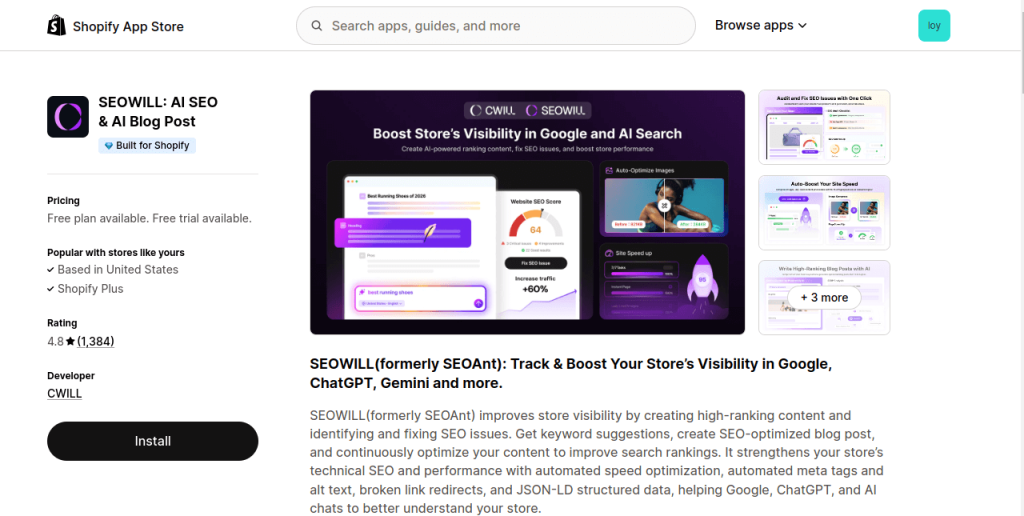
SEOWILL stands out as a comprehensive SEO solution with powerful AI-driven meta tag generation capabilities. The app has been praised for significantly improving organic traffic and search rankings. Featured in our AI-Powered Shopify Apps guide, SEOWILL combines multiple SEO functions including automated meta tag optimization.
Key Features:
- AI-powered meta tag generation using ChatGPT
- Bulk meta tag optimization
- Automated alt text generation
- On-page SEO scanner with SERP-driven insights
- Auto-redirect for broken links
- JSON-LD structured data (learn more about schema markup)
- Page speed optimization
- Image compression and optimization
Meta Tag Capabilities:
- Automatic meta title and description generation
- Bulk editing for products, collections, and pages
- Keyword-optimized suggestions
- Template-based generation rules
- Multi-language support
Pricing:
- Free plan available
- Premium plans with advanced features
- Affordable monthly subscriptions
Best For: Stores of all sizes wanting AI-powered automation with comprehensive SEO features
User Feedback (2026): Merchants report significant improvements in SEO performance and organic traffic, with particular praise for the responsive support team and user-friendly interface.
Why It Ranks #1: SEOWILL’s combination of AI automation, comprehensive features, and proven results makes it our top choice for meta tag optimization in 2026.
2. Metagen AI | Metatags & LLMs
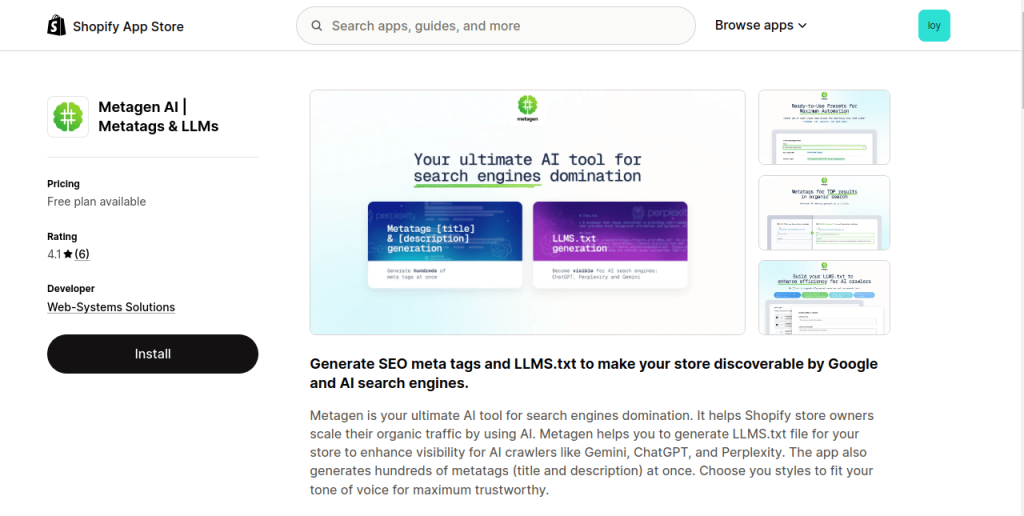
Overview: Metagen AI specializes in bulk meta tag generation with a unique focus on AI crawler optimization through LLMS.txt generation.
Key Features:
- AI-powered bulk meta tag generation
- LLMS.txt file generation for AI crawlers (ChatGPT, etc.)
- Ready-made presets for different store types
- ChatGPT integration for keyword optimization
- Bulk catalog updates
- Automatic processing of new products
Meta Tag Capabilities:
- Generates unique meta titles and descriptions
- Keyword-focused optimization
- Bulk updates across entire catalog
- Preview before applying changes
- Customizable generation rules
Pricing: Subscription-based with various tiers
Best For: Large catalogs needing bulk optimization and AI search visibility
Standout Feature: LLMS.txt generation helps stores get recommended by AI assistants and chatbots a critical advantage for 2026’s AI-driven search landscape.
Recent Development: Team is actively working on adding tone and style customization options based on user feedback.
Comparison Note: While similar to SEOWILL in AI capabilities, Metagen AI focuses specifically on bulk operations and AI crawler optimization, making it ideal for stores with hundreds or thousands of products.
3. SearchPie: SEO, Speed & Schema
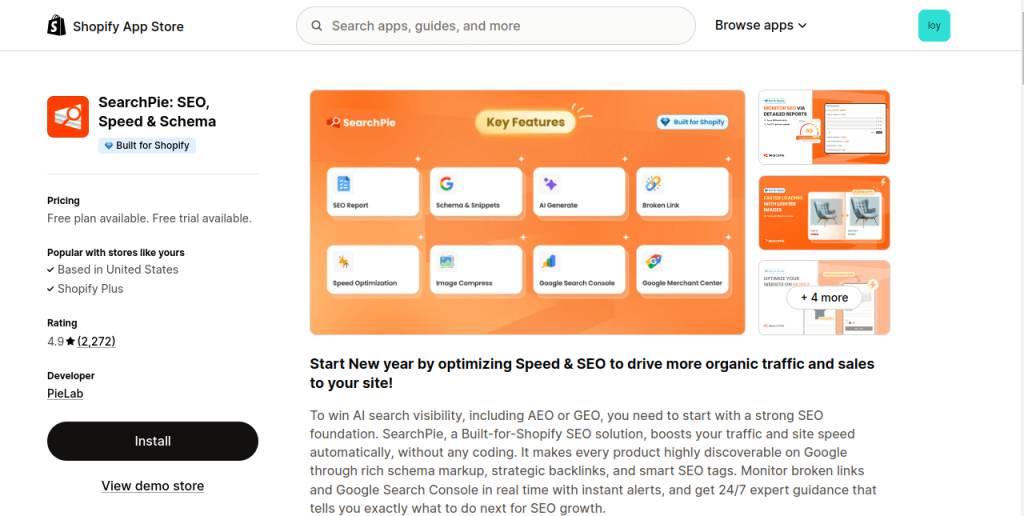
Overview: SearchPie is a Built-for-Shopify SEO solution that combines meta tag optimization with speed enhancements and schema markup.
Key Features:
- Automated meta tag optimization
- Bulk meta and alt tag editing
- Rich schema markup (learn more about schema)
- Speed and image optimization
- Comprehensive SEO reports
- Google Search Console integration
- 24/7 expert support
- Broken link monitoring with instant alerts
Meta Tag Capabilities:
- Strategic meta tag generation
- Keyword-based optimization
- Bulk editing capabilities
- Template support
- Real-time SEO scoring
Pricing:
- Free plan available
- Premium plan: $39/month
Best For: Beginners wanting comprehensive SEO with excellent support
User Feedback: Merchants appreciate the easy-to-use interface and visible improvements in rankings, with many noting significant time savings.
Pro Tip: SearchPie’s combination of meta tags, schema markup, and speed optimization makes it an excellent all-in-one solution for stores just starting their SEO journey.
4. Sherpas: Smart SEO
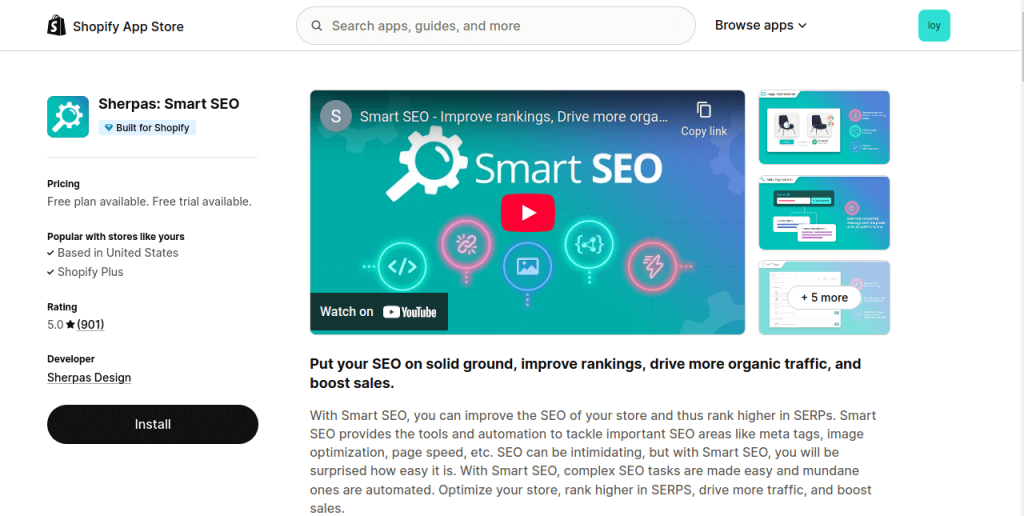
Overview: Smart SEO has become a trusted default for many Shopify developers and agencies, offering reliable meta tag management with AI integration.
Key Features:
- ChatGPT-4 Turbo integration for meta generation
- Bulk meta tag and alt tag editing
- Image optimization
- JSON-LD structured data
- Broken link detection and fixing
- Backlink analysis
- Multi-language SEO support (20+ languages)
Meta Tag Capabilities:
- AI-generated product meta tags
- Bulk optimization across all page types
- Template-based generation
- Multi-language meta tag support
- SEO audit for meta tag quality
Pricing: 14-day free trial, then monthly subscription
Best For: Multilingual stores and agencies managing multiple Shopify stores
Professional Endorsement: Widely used by SEO professionals and becomes part of default setups for many development agencies. Featured in our comprehensive SEO tools roundup.
Agency Insight: Many Shopify Plus agencies bundle Smart SEO with schema markup tools for complete technical SEO coverage.
5. Avada SEO Suite
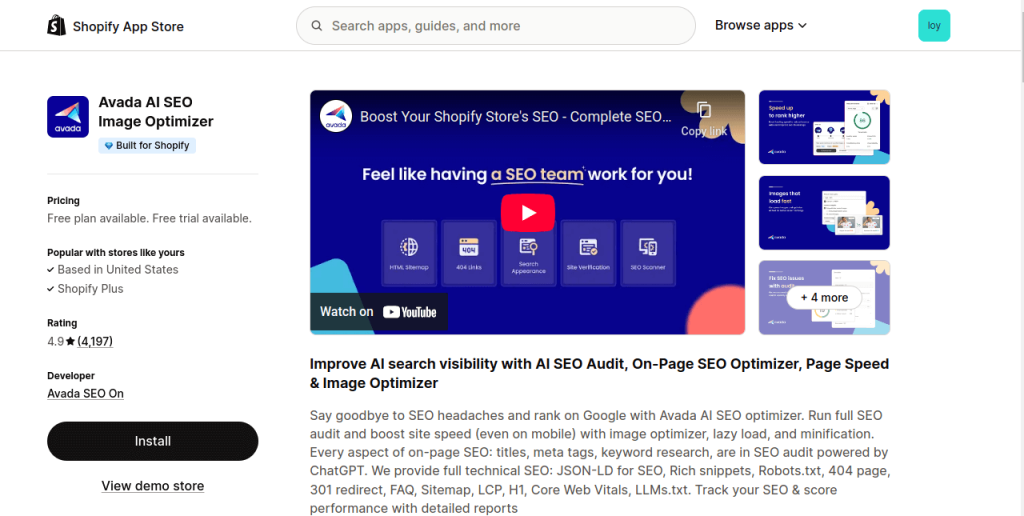
Overview: Avada offers premium SEO tools with comprehensive meta tag management in an easy-to-use interface.
Key Features:
- AI-powered meta tag generation
- Page-specific SEO audit
- Meta tag preview functionality
- Keyword optimization
- Image compression (68% PNG, 9% JPG)
- JSON-LD setup
- Broken link fixing
- Multi-platform verification (Search Console, Pinterest)
Meta Tag Capabilities:
- AI metadata generation
- Edit main keywords per page
- Preview meta tags before publishing
- Bulk optimization options
- URL handle management
Pricing: Premium pricing starting at $34.95/month
Best For: Large stores with budget for premium tools seeking faster optimization
Notable Feature: Detailed SEO audit showing all issues on specific pages for targeted optimization.
ROI Perspective: While Avada has higher pricing, stores with 100+ products often see ROI within the first month through improved click-through rates and organic traffic.
6. FavSEO – SEO & Page Speed
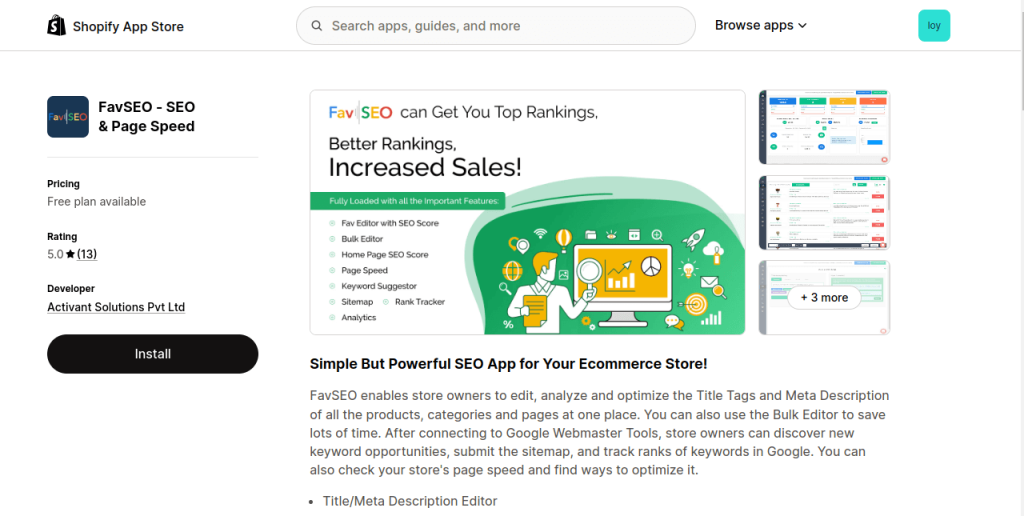
Overview: FavSEO provides a centralized platform for editing and optimizing meta tags across all page types with advanced audit capabilities.
Key Features:
- Centralized meta tag editor
- Bulk editor for time savings
- Google Webmaster Tools integration
- Keyword opportunity discovery
- Sitemap submission
- Keyword rank tracking
- Page speed analysis
- Redirect management (404, 301, live URLs)
Meta Tag Capabilities:
- Edit title tags and meta descriptions in one place
- Analyze and optimize all products, categories, and pages
- Bulk editing functionality
- Performance tracking
- Optimization suggestions
Pricing: Multiple subscription tiers
Best For: Store owners wanting centralized control with detailed analytics
User Experience: Initial learning curve but becomes powerful once users understand the workflow.
Integration Tip: FavSEO works particularly well when combined with schema markup apps and speed optimization tools for a complete technical SEO stack.
7. SEO Manager
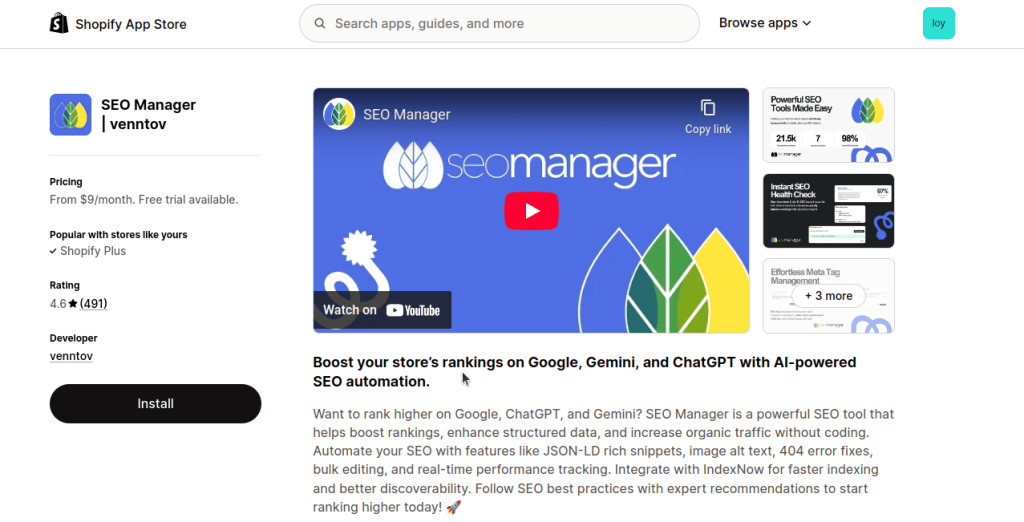
Overview: SEO Manager offers a user-friendly, guided approach to meta tag optimization with pre-made templates for faster implementation.
Key Features:
- Pre-made meta tag templates
- Bulk editing capabilities
- Image optimization
- Automatic sitemap generation
- Broken link detection and fixing
- Google Webmaster Tools integration
- Guided SEO recommendations
Meta Tag Capabilities:
- Template-based meta tag creation
- Bulk updates across products and collections
- Character count guidance
- Keyword optimization suggestions
- Duplicate meta tag detection
Pricing: Affordable for small to mid-sized businesses
Best For: Beginners and small businesses wanting guided SEO with templates
Note: Users must manually remove old meta tags from layout after installation.
Beginner Advantage: SEO Manager’s template system makes it easy for non-technical store owners to implement professional meta tags without understanding the underlying code.
8. OptizenAI – SEO & AI Tools
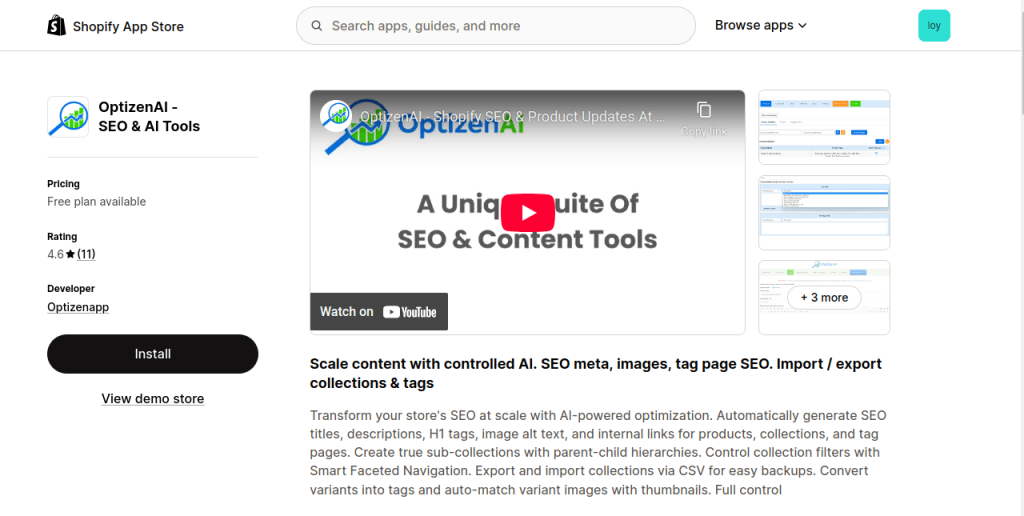
Overview: OptizenAI transforms store SEO at scale with AI-powered optimization for meta tags, content, and images.
Key Features:
- AI-powered bulk meta generation
- SEO titles, descriptions, and H1 tags
- Image alt text automation
- Internal linking automation
- Sub-collection creation with hierarchies
- Smart faceted navigation
- CSV export/import for collections
- Variant tag conversion
Meta Tag Capabilities:
- AI generates titles and descriptions at scale
- Product, collection, and tag page optimization
- Automatic processing of new products
- Bulk catalog updates
- SEO tag page creation
Pricing: Multiple tiers based on catalog size
Best For: Stores with large catalogs needing scale optimization
Unique Selling Point: Ability to unlock hundreds of optimized pages from product variants.
Scale Strategy: OptizenAI excels at creating SEO-optimized pages from product variants, which when combined with proper schema markup, can dramatically expand your search visibility.
9. SEO HERO AI Meta Tag Generator
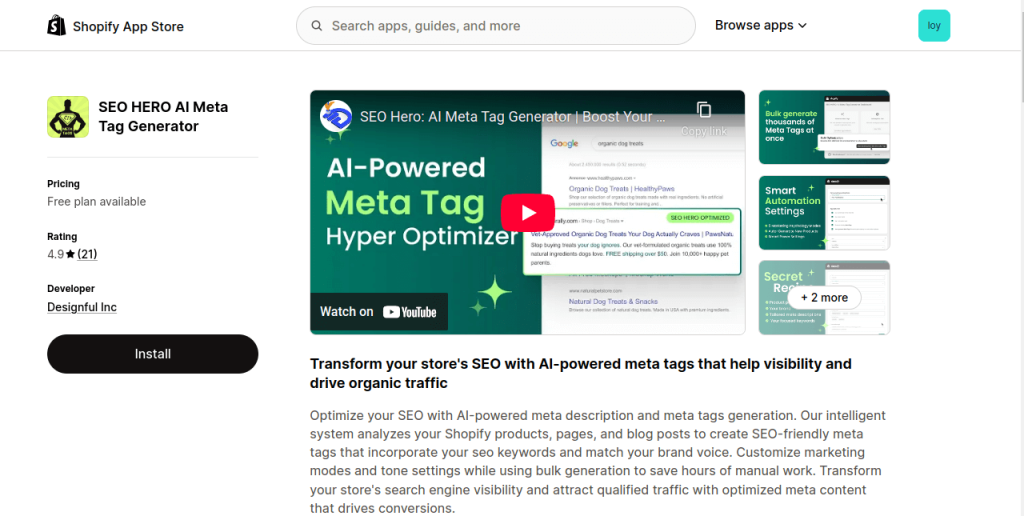
Overview: SEO HERO AI focuses specifically on meta tag generation with conversion-focused optimization and marketing mode customization.
Key Features:
- AI-powered meta tag generation
- Bulk generation for all content types
- Customizable marketing modes
- Strategic keyword placement
- Multiple tone settings
- Automatic new product processing
- Brand voice matching
Meta Tag Capabilities:
- Conversion-focused meta tag creation
- Incorporates target SEO keywords
- Tone customization (professional, casual, etc.)
- Bulk generation across store
- Preview and approve before publishing
Pricing: Affordable with different feature tiers
Best For: Stores focusing on conversion optimization through better meta tags
User Praise: Generates clear, SEO-friendly tags that match product content accurately.
Conversion Focus: Unlike general SEO apps, SEO HERO AI specifically optimizes meta tags for conversions, using action-oriented language and psychological triggers in descriptions.
10. Tapita SEO & Speed Optimizer
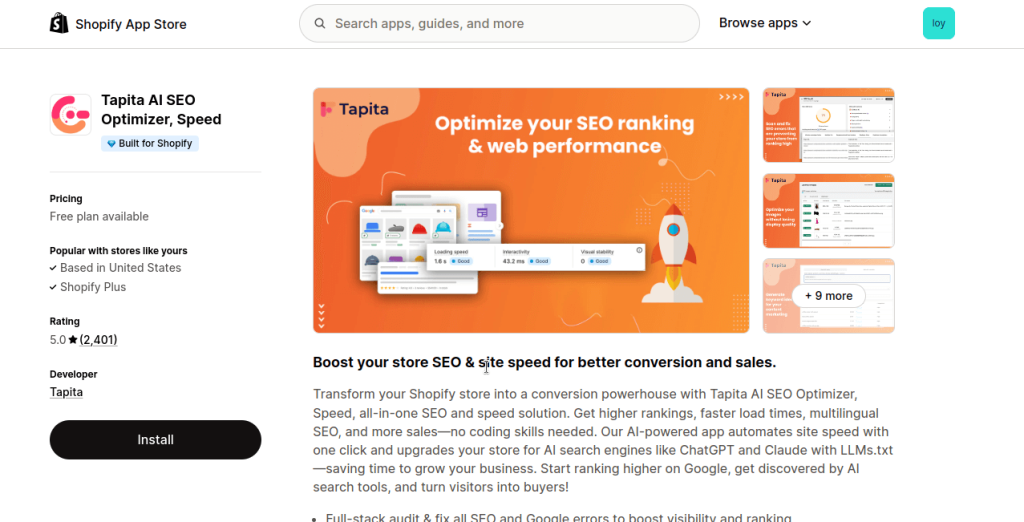
Overview: Tapita combines meta tag optimization with comprehensive SEO features and a generous free plan.
Key Features:
- Keyword generator
- Automated alt text with templates
- Structured data configuration
- Broken link fixing
- Speed optimization
- Google Search Console integration
- Sitemap management
- Page indexing control
Meta Tag Capabilities:
- Bulk meta tag editing
- Template-based alt text optimization
- Keyword research integration
- SEO audit recommendations
- Meta tag analysis
Pricing: Generous free plan with premium features available
Best For: Budget-conscious stores wanting comprehensive features
Value Proposition: Free version offers more features than many paid competitors, making it excellent for testing SEO strategies before committing to premium tools.
Budget Strategy: Start with Tapita’s free plan to establish your meta tag foundation, then upgrade or switch to specialized tools like SEOWILL or Metagen AI as your store grows.
11. Swift SEO
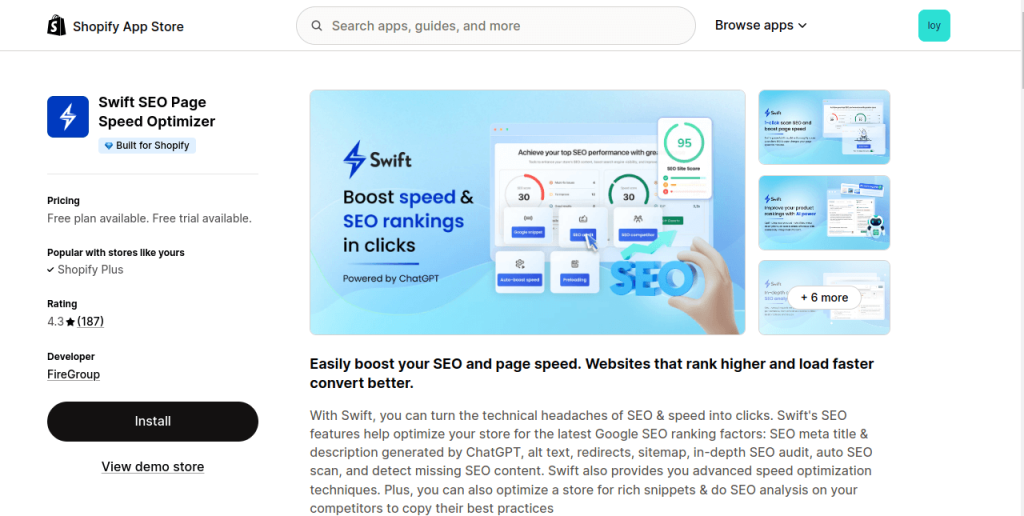
Overview: Swift SEO aims to boost both speed and rankings with AI-powered meta tag generation and comprehensive auditing.
Key Features:
- ChatGPT-generated meta titles and descriptions
- In-depth SEO audit
- Auto SEO scans
- Missing SEO content detection
- Redirect management
- Sitemap optimization
- Speed analysis
Meta Tag Capabilities:
- AI-powered meta generation
- Automated detection of missing meta tags
- Bulk optimization options
- SEO score tracking
- Continuous monitoring
Pricing: Multiple subscription levels
Best For: Stores wanting automated detection and fixing of meta tag issues
Automation Strength: Swift SEO’s continuous monitoring catches new pages without meta tags, ensuring complete coverage as your store grows.
12. StoreSEO – Meta Tag Optimizer
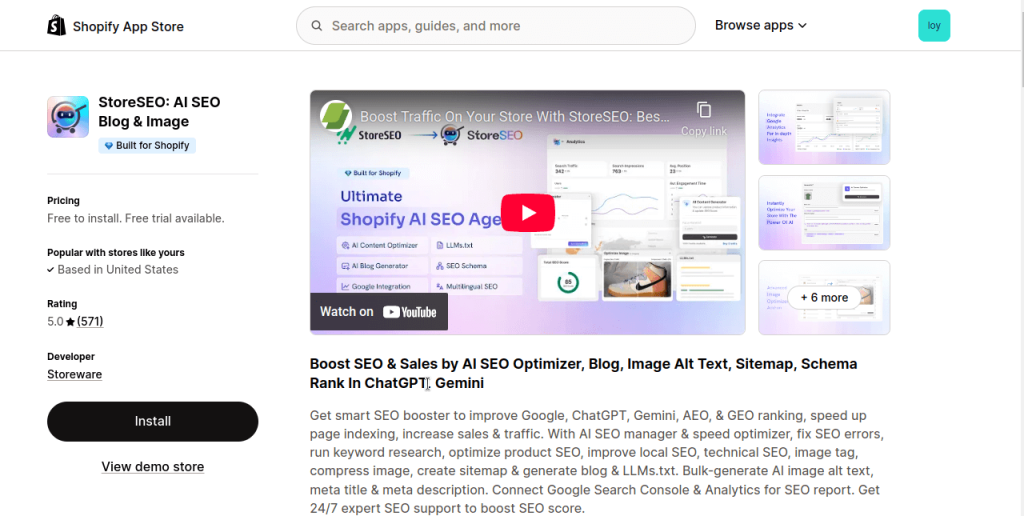
Overview: StoreSEO provides handy SEO scores and detailed analysis for meta tag optimization across all content types.
Key Features:
- SEO scoring system
- Basic and detailed SEO analysis
- Free keyword generator
- Related keyword suggestions
- AI optimizer for content and meta tags
- Google Search Console integration
- Google Analytics integration
- Schema options
Meta Tag Capabilities:
- Monitor optimization scores
- Product, collection, page, and blog optimization
- Keyword-focused meta generation
- AI-powered suggestions
- Performance analytics
Pricing: Free and premium plans available
Best For: Stores wanting detailed analysis and scoring for meta optimization
Key Benefit: Clear scoring system helps prioritize optimization efforts, showing which pages need attention most urgently.
Analytics Integration: StoreSEO’s connection with Google Analytics and Search Console provides comprehensive performance tracking, helping you measure the direct impact of meta tag improvements on traffic and conversions.
How to Choose the Right Meta Tag Optimizer
Consider these factors when selecting a meta tag optimizer for your Shopify store:
1. Automation Level
Determine how much manual work you want to do versus automated generation. Apps like SEOWILL and Metagen AI offer maximum automation, while SEO Manager provides more manual control with templates.
2. AI Capabilities
Modern apps with ChatGPT/AI integration can generate higher-quality, more relevant meta tags. Learn more about leveraging AI for SEO in our comprehensive AI-powered Shopify apps guide.
3. Bulk Editing
Essential for stores with large catalogs to save time. OptizenAI and Metagen AI excel at bulk operations.
4. Language Support
Critical for international stores operating in multiple markets. Smart SEO supports 20+ languages.
5. Integration
Check compatibility with your existing SEO tools and workflows. Most apps integrate well with schema markup solutions and analytics platforms.
6. Budget
Balance cost against time savings and potential traffic improvements. Start with free options like Tapita or StoreSEO, then upgrade as needed.
7. Support Quality
Premium apps often include expert guidance for optimization strategies. SearchPie and Schema Plus are known for exceptional support.
8. Additional Features
Many meta tag optimizers include image optimization, speed enhancements, and schema markup. Consider all-in-one solutions from our SEO apps guide.
Meta Tag Optimization Best Practices
Title Tags:
Try to :
- Keep between 50-60 characters (70 maximum)
- Include primary keyword near the beginning
- Make each title unique across your site
- Include brand name (usually at the end)
- Write for humans, not just search engines
- Be specific and descriptive
Thing to avoid:
- Avoid keyword stuffing
- Don’t use ALL CAPS
- Don’t duplicate titles across pages
- Avoid generic titles like “Product Page”
Meta Descriptions:
- Aim for 150-160 characters
- Include a clear call-to-action
- Incorporate target keywords naturally
- Make each description unique
- Be compelling and click-worthy
Related: Pair optimized meta tags with proper schema markup implementation to maximize your search result appearance with both rich snippets and compelling titles.
- Don’t exceed 160 characters significantly
- Avoid duplicate descriptions
- Don’t stuff with keywords
- Don’t write generic descriptions
Testing & Iteration:
Test your meta tags regularly using Google Search Console and adjust based on performance data. Apps like FavSEO and StoreSEO provide built-in analytics to track improvements.
Implementation Strategy
Step 1: Audit Current Meta Tags
- Review existing titles and descriptions
- Identify missing or duplicate meta tags
- Check character lengths
- Analyze keyword usage
Use tools like SEO Manager or Swift SEO to automate this audit process and identify all meta tag issues across your store.
Step 2: Choose Your App
- Test apps with free trials
- Compare features against your needs
- Check user reviews from 2026
- Verify Shopify compatibility
For a broader perspective on SEO tools beyond meta tags, review our 13 best SEO apps for Shopify to build a complete optimization stack.
Step 3: Set Up Generation Rules
- Define templates for different page types
- Establish keyword strategy
- Configure tone and style preferences
- Set up automation rules
Pro tip: Start with AI-powered apps like SEOWILL or SEO HERO AI to generate initial templates, then refine them manually for your specific brand voice.
Step 4: Bulk Optimize
- Start with high-priority pages (bestsellers)
- Review AI-generated suggestions
- Customize as needed
- Apply changes in batches
Important: Never apply bulk changes without reviewing samples first. Apps like Metagen AI offer preview functionality before committing changes.
Step 5: Monitor and Refine
- Track CTR changes in Search Console
- Monitor ranking improvements
- Test different approaches
- Continuously optimize based on data
Integrate your meta tag app with analytics tools. StoreSEO and SearchPie offer native Google Analytics integration for comprehensive performance tracking.
Measuring Success
Track these metrics after implementing meta tag optimization:
Immediate (1-2 weeks):
- All pages have unique meta tags
- Character counts within optimal ranges
- Keywords properly integrated
- No duplicate meta tags
Short-term (1-2 months):
- Improved click-through rates
- Better Search Console impressions
- Reduced bounce rates
- Increased organic sessions
Long-term (3-6 months):
- Higher search rankings
- Increased organic traffic
- Better conversion rates
- Improved overall SEO performance
Tracking Tools: Use Google Search Console alongside your chosen app. For comprehensive tracking, consider apps like FavSEO or StoreSEO that integrate analytics directly.
For the complete picture of SEO success, combine meta tag metrics with schema markup performance and overall site health indicators from our complete SEO guide.
Common Mistakes to Avoid
1. Duplicate Meta Tags
Using the same meta description across multiple pages confuses search engines and wastes opportunity.
Solution: Use bulk editing tools like Metagen AI or OptizenAI to generate unique descriptions at scale.
2. Keyword Stuffing
Cramming keywords makes meta tags unreadable and can trigger spam filters.
Solution: Let AI tools like SEOWILL handle keyword placement naturally using proven SEO patterns.
3. Too Long or Too Short
Exceeding character limits gets truncated; being too brief wastes potential.
Solution: Apps like SEO Manager provide character count guidance and warnings to keep you within optimal ranges.
4. Generic Descriptions
“Buy products here” provides no value. Be specific about what makes each page unique.
Solution: Use conversion-focused tools like SEO HERO AI that generate action-oriented, specific descriptions.
5. Ignoring User Intent
Meta tags should address what users are searching for, not just include keywords.
Solution: Research user intent using the keyword tools built into Tapita or FavSEO, then craft meta tags around those insights.
6. Not Updating Regularly
Meta tags should evolve with your products, promotions, and seasonal changes.
Solution: Set up automated monitoring with Swift SEO to detect changes and trigger meta tag updates.
7. Forgetting Mobile Preview
Always check how meta tags appear on mobile devices.
Solution: Use preview features in Avada SEO or SearchPie to see exactly how your meta tags display on different devices.
8. Neglecting Schema Integration
Meta tags work best when combined with proper structured data.
Solution: Choose apps that handle both, or pair your meta tag optimizer with our recommended schema markup tools.
Advanced Tips for 2026
1. AI Search Optimization
Include LLMS.txt generation to help AI assistants recommend your products. Learn more about AI-powered SEO in our comprehensive AI Apps guide.
Implementation: Metagen AI specializes in LLMS.txt files, making your store more discoverable by ChatGPT, Claude, and other AI assistants.
2. Seasonal Variations
Update meta tags for holidays and seasonal promotions.
Automation: Set up seasonal templates in Smart SEO or SEOWILL to automatically rotate meta tags based on calendar dates.
3. A/B Testing
Test different meta descriptions to find highest-performing versions.
Approach: Use SEO HERO AI’s multiple variations feature to test 2-3 versions of each meta description, then track performance in Google Search Console.
4. Local SEO Integration
Include location keywords for local searches when relevant.
Strategy: For local businesses, tools like SearchPie help identify local search opportunities and incorporate location-based keywords naturally.
5. Emotion and Action
Use power words and clear calls-to-action in descriptions.
Examples: Apps like SEO HERO AI are specifically designed for conversion-focused copy with emotional triggers and action verbs.
6. Competitive Analysis
Research competitor meta tags for insights and differentiation opportunities.
Tools: Combine your meta tag app with competitive research from our SEO tools guide to find gaps and opportunities.
7. Rich Snippet Optimization
Coordinate meta tags with schema markup for maximum impact.
Best Practice: When using meta tag apps like SEOWILL or SearchPie that include schema features, ensure your meta descriptions align with structured data to create cohesive, compelling search results.
For complete rich snippet optimization, see our guide on best schema markup apps.
Traffic without trust and retention is wasted opportunity.
Yuko helps turn one-time visitors into repeat buyers
Conclusion
Optimizing meta tags is one of the most impactful yet often overlooked aspects of Shopify SEO. With the right app, you can transform this tedious manual process into an automated system that continuously improves your search visibility and click-through rates.
Quick Recommendations:
- Best Overall: SEOWILL (SEOAnt) – Comprehensive AI-powered solution
- Best for Bulk Operations: Metagen AI – Specialized bulk meta generation
- Best for Beginners: SearchPie – User-friendly with excellent support
- Best for Multilingual: Sherpas Smart SEO – 20+ language support
- Best Premium Option: Avada SEO Suite – Advanced features with detailed audits
- Best Value: Tapita SEO – Generous free plan with premium features
- Best for Large Catalogs: OptizenAI – Scale optimization capabilities
The investment in a quality meta tag optimizer typically pays for itself within weeks through improved organic traffic. Start with apps offering free trials, test their AI generation quality, and choose the solution that best fits your workflow and catalog size.
Remember, meta tag optimization is not a one-time task but an ongoing process. Regular updates, performance monitoring, and continuous refinement will keep your store competitive in 2026’s evolving search landscape.
Related Reading
- Trust Badge Apps for Checkout : Build Trust
- 15 Best Upsell Apps : Increase Revenue
- Product Research Apps : Find & Launch Products
Frequently Asked Questions
You should only use one meta tag optimizer at a time. Running multiple apps simultaneously causes serious conflicts including: – Duplicate or overwritten meta tags – Conflicting automation rules – Slower site performance – Inconsistent data sent to search engines.
Meta tags alone won’t guarantee higher rankings, but they create a powerful indirect effect on your search performance.
Direct Benefits:
1. Improved click-through rates (CTR) from search results
2. Better user experience and relevance signals
3. Higher engagement metrics (lower bounce rates)
For Best Results, Combine:
1. Optimized meta tags (using apps from this guide)
2. Schema markup for rich snippets (star ratings, pricing displays)
3. Quality product descriptions with target keywords
4. Fast page load times
5. Positive user reviews and ratings
Update frequency depends on your store activity and product lifecycle:
Minimum (All Stores):
Quarterly review of top-performing pages
Immediate updates for new products
Seasonal updates for holiday promotions
Recommended (Active Stores):
Monthly performance review via Google Search Console
Weekly updates for promotional items
Real-time updates for major stock/pricing changes
About Ranking Impact:
Small tweaks (5-10 words) won’t hurt rankings
Complete rewrites may temporarily affect rankings for 2-3 weeks
A/B test major changes on low-traffic pages first