
Between rising ad costs, increased competition, and the ongoing erosion of third-party tracking, acquiring a new customer gets more expensive every year.
Customer acquisition costs have roughly tripled over the past decade. And they’re not coming back down.
The math is shifting. For most Shopify brands, the path to sustainable growth isn’t spending more to acquire new customers. It’s getting more value from the ones you already have.
Strong retention and loyalty is the difference between a brand built for long-term success, and one that will struggle to keep up if Meta keeps driving up ad costs.
A mobile app is the most underutilized tool for doing exactly that. It gives you a direct, owned channel to your best customers, with push notifications, a persistent presence on their home screen, and a shopping experience built for repeat buying.
And launching one is far easier than most brands assume.
Why Your Shopify Store Needs a Mobile App
Just 4.5% of Shopify brands that do $1M+ in annual revenue have a mobile app.
It’s not because the channel doesn’t work. It’s because, for most brands, this is a blind spot (one that’s actually easy to correct).
But before we get into how to launch your Shopify store’s mobile app, here’s why you need an app.
The Mobile Gap Is Costing You Revenue
Here’s a pattern that plays out across almost every Shopify store: roughly 75% of ecommerce site traffic comes from mobile devices, but mobile web conversion rates hover around 1.5-2%, compared to 3% or more on desktop.
Even your regular customers are browsing, but getting distracted. Because that’s the nature of mobile browsing.
Mobile apps change the equation. Ecommerce apps convert at roughly 3x the rate of mobile web, according to Criteo data. Shoppers who use apps also view significantly more products per session and spend more per order.
It’s not that the same customers suddenly become more willing to buy. It’s that the app experience removes the friction that mobile web creates.
Think about your own behavior. When you’re shopping on your phone through a browser, you’re one notification away from losing focus.
In an app, the experience is faster, smoother, and more focused. The checkout flow is familiar. Saved payment info and shipping details reduce steps.
The result is more completed purchases from the same audience you’re already attracting.
Push Notifications Give You a Direct Line to Customers
Mobile push notifications give you a new, extremely effective marketing channel, built for today’s shoppers.
They land directly on the lock screen. They’re instant, they’re almost guaranteed to be seen, impossible to ignore.
With push notifications, your promotional blasts, new product announcements, abandoned cart notifications, loyalty program updates light up your customer’s lock screen, whatever they’re doing.
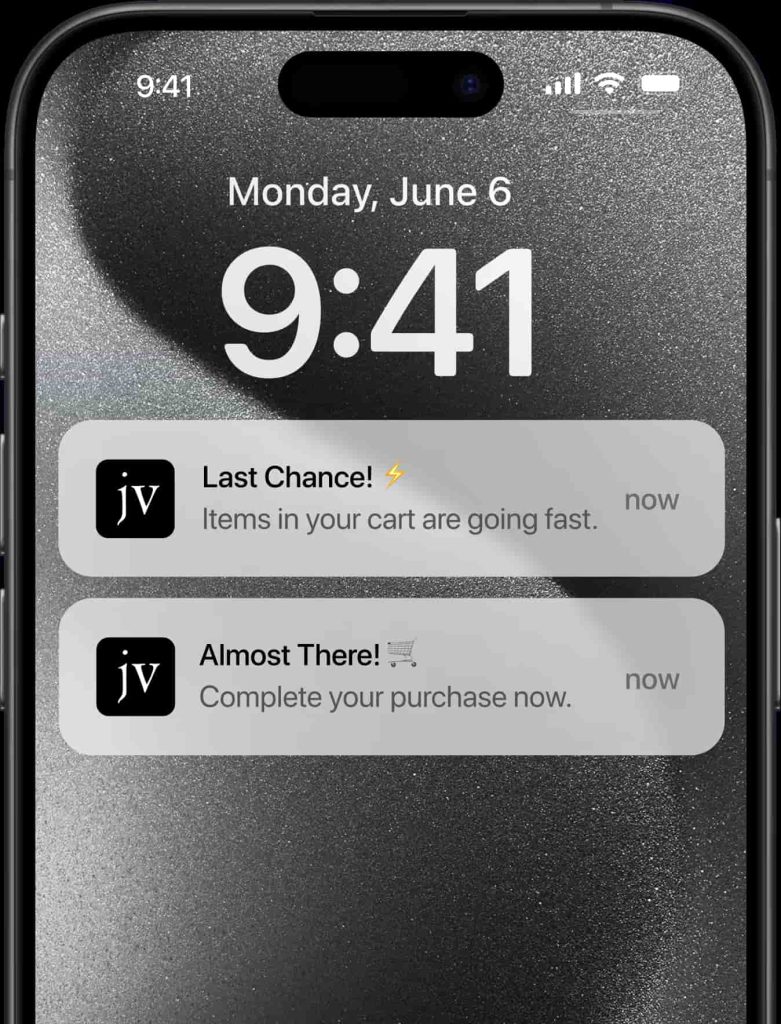
This kind of direct access is priceless.
Push notifications are an incredibly powerful tool to have in your toolkit, and the perfect complement to email, SMS, WhatsApp and the other channels you’re already using.
App Customers Are Your Most Valuable Customers
Customers who download your app aren’t just buying more often. They’re buying bigger.
Across ecommerce brands with mobile apps, app customers typically show 3.5-7x more revenue per user, higher average order values, and significantly better repeat purchase rates compared to mobile web visitors.
Some of that is self-selection: customers who take the step to download your app are already more engaged. But the app also reinforces the behavior.
Push notifications bring them back. A smoother checkout reduces hesitation. The app icon on their home screen keeps your brand top of mind in a way that a bookmark or a social media follow simply can’t match.
For brands focused on retention and lifetime value, this is the core argument. You’re not trying to acquire new customers with an app. You’re making your existing customers more valuable.
Is a Mobile App Right for Your Store?
You might be saying, “but we don’t need an app.”
Not every Shopify store needs an app. But for certain types of brand and specific verticals, having a mobile app should be non-negotiable.
Here’s what kind of brands need their own app.
Brands with High Repeat Purchase Rates
Consumables, supplements, skincare, pet supplies, coffee, food and beverage.
If your customers reorder on a regular cycle, an app keeps you on their home screen between purchases.
Push notifications become your most effective reorder reminder, and the convenience of a saved-login, one-tap checkout experience makes repeat buying effortless.
Fashion and Apparel
Fashion shoppers browse frequently, often without immediate intent to buy.
An app turns that browsing into a habit. New arrival notifications, back-in-stock alerts, and early access to drops give your audience reasons to keep checking in.
Brands with frequent product launches or seasonal collections see especially strong engagement.
Health, Wellness, and Fitness
Supplement brands, activewear, wellness products. These categories tend to build loyal followings with high emotional investment in the brand.
An app deepens that relationship. Loyalty programs, content (workout guides, wellness tips), and personalized recommendations all perform well in an app format.
Home and Lifestyle
Furniture, home decor, kitchenware. These categories often involve longer browsing sessions and higher average order values.
An app’s smoother experience reduces the friction that kills mobile web conversions on higher-ticket items, and wishlists or saved collections keep customers coming back when they’re ready to buy.
Subscription and Membership Brands
If your model involves recurring revenue, whether that’s subscription boxes, membership access, or auto-replenishment, an app is a natural extension.
It gives subscribers a dedicated space to manage their account, and push notifications reduce churn by keeping the subscription top of mind.
The Common Thread
The pattern across all of these: brands where customer lifetime value matters more than one-time transactions.
If you’re spending significant money on customer acquisition and want to maximize the return on each customer you bring in, a mobile app is one of the most effective tools for doing that.
Even outside these specific verticals, the general rule holds: if your store has strong mobile traffic and you have a product that people buy more than once, you’re well-positioned for an app.
How to Launch a Mobile App For Your Shopify Store (It’s Easier Than You Think)
If you’ve looked into mobile app development in the past, you might be carrying some outdated assumptions.
Custom native app builds used to be the only option, and they came with six-figure price tags, 6-12 month timelines, and the ongoing cost of maintaining a completely separate codebase.
For most Shopify brands, that never made sense.
The landscape is different now. You don’t need to spend hundreds of thousands of dollars, just for a channel that now costs six figures per year to run.
Here’s how to launch your app (the smart way).
Turn Your Website Into a Mobile App
The mistake most brands make: thinking a mobile app is a completely separate channel that needs its own, unique UI and UX.
Does your customer really need something fundamentally different from what’s on your website? They just need to browse, buy, engage with your app largely the same way they do on your site.
That’s why the best return on investment comes from turning your existing Shopify store into a native mobile app.
A service like MobiLoud does this for you. As long as your website is fast, responsive and works well on mobile, the service will extend your website into a native app that does everything your customers expect in a native mobile app.
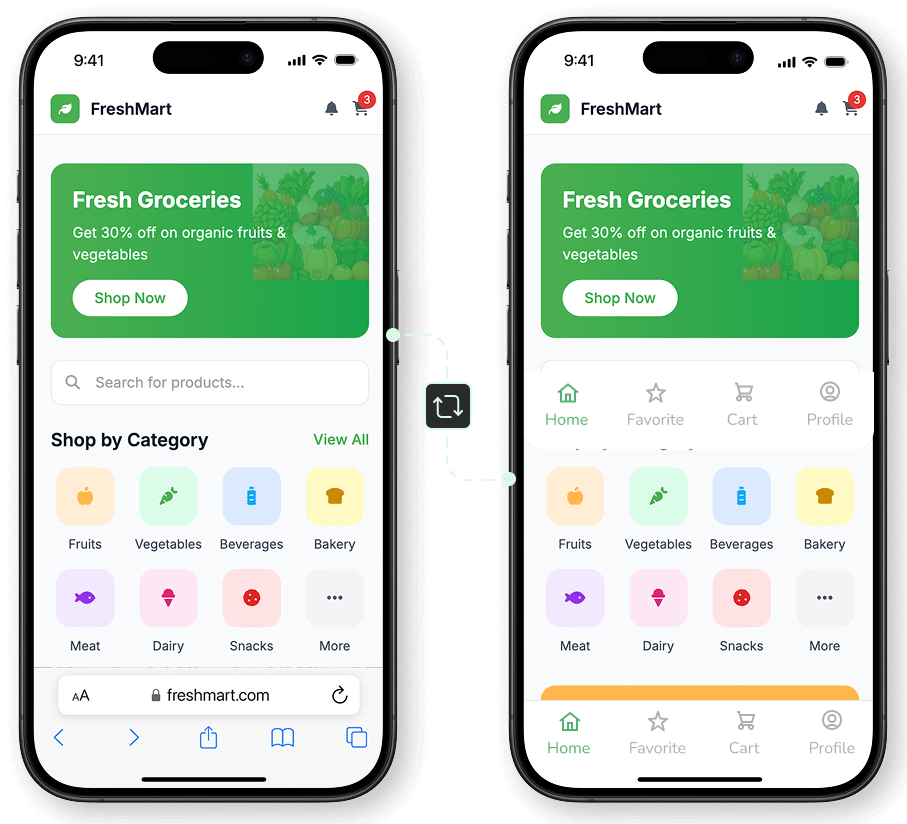
The difference between this and the classic way of launching mobile apps is you’re not rebuilding anything, you’re not managing a separate channel.
All your apps, all the existing systems you’ve set up for conversions, retention, AOV on your website carry over to your mobile app – and you manage everything from one place (update your website, the app updates automatically).
Turning your website into an app takes away all of the risk and overhead of launching your app.
Alternatives
Building a mobile app powered by your website is the most effective, reliable way to launch.
It typically comes at a little higher cost, though. It’s thus best suited for growing brands with a solid revenue base already.
There are some cheaper alternatives too. DIY app builders from the Shopify app store, which take more work but can come at a slightly lower recurring cost.
It’s possible to go live with a mobile app, using simple no-code templates, for a cost of around $250 or less per month.
And if your brand is still in its early stages (under $1M annual revenue, for example), it’s generally a little early to be focusing on your app.
Mobile apps amplify your existing customer base – so you want to focus first on acquisition and growth.
Under $1M revenue, make it your priority to grow traffic and revenue and get to the seven-figure mark at least.
Once you’re there, you can start thinking about building a mobile app (or converting your site into an app).
Making Your App Work: Tips for Driving Retention and LTV
Launching the app is step one. Getting real results from it is about how you integrate it into your broader customer experience.
Here are a few strategies that consistently move the needle.
Actually Use Push Notifications
Push notifications are the single most powerful feature of having a mobile app. Yet too many brands do the work to launch an app, but never really use push notifications.
If you’re not sending push notifications, you’re ignoring what could be your highest-ROI marketing channel.
Start with automations that run in the background:
- Abandoned cart reminders (the highest-converting push type for most brands)
- Back-in-stock alerts for products customers have viewed
- Order and shipping updates (these build trust and keep customers opening your notifications)
Then layer in manual campaigns sparingly. One to two push notifications per week is a good starting cadence for most brands. Think new arrivals, limited-time offers, and content your audience genuinely cares about. Monitor opt-out rates and dial back if they start climbing.
Use the App to Deepen Your Loyalty Program
The app is the best surface for your loyalty/rewards program.
Customers who have your app installed are already your most engaged segment. Meeting them where they are with points updates, tier progress, and reward reminders turns a passive loyalty program into an active retention engine.
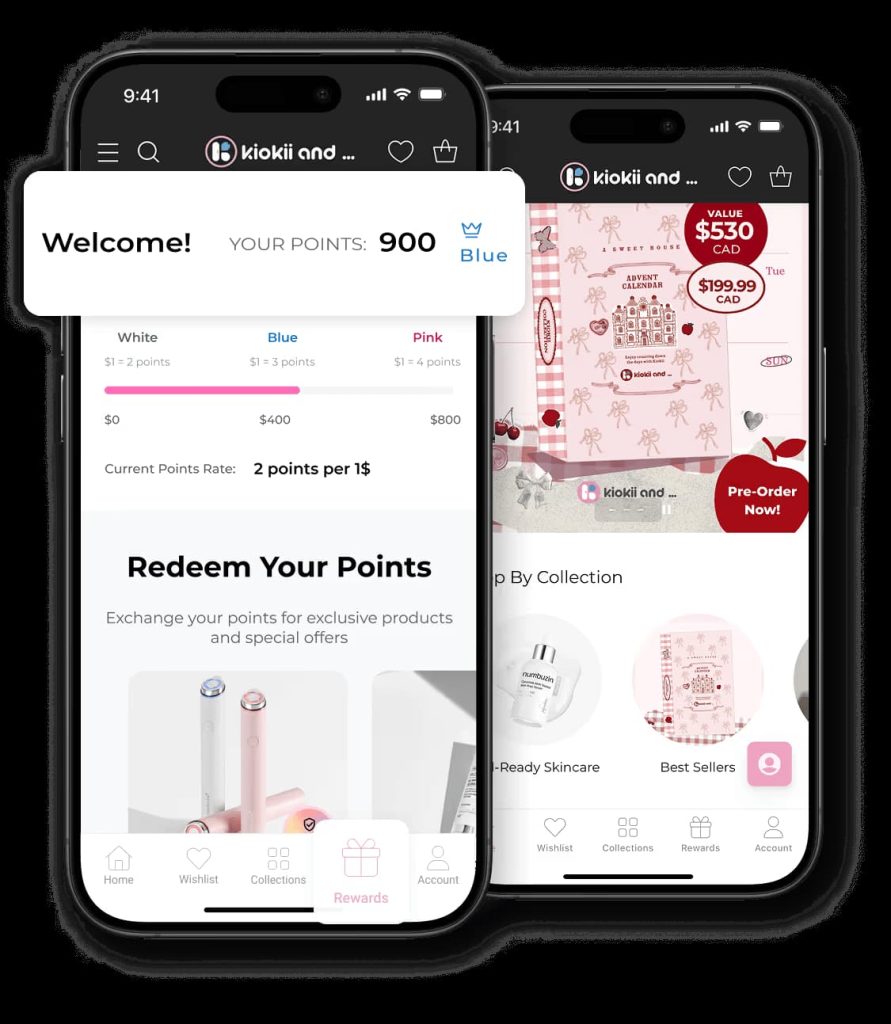
You can even go a step further with app-exclusive rewards or early access to new products. It gives customers a tangible reason to keep the app installed and check back regularly.
Promote the App Where It Matters
Your app only drives results if customers download it. The good news: you don’t need a complicated acquisition strategy. Your existing customers and traffic are the best source of installs.
- Add a smart banner to your mobile website that prompts visitors to download the app
- Include the app in your post-purchase email flow (the moment right after a purchase is when customers are most receptive)
- Mention the app in your packaging or order inserts
- Promote it across your social channels periodically
The goal isn’t to maximize raw downloads. It’s to get your repeat-prone customers into the app, where the experience keeps them coming back.
Track the Metrics That Matter
Once your app is live, pay attention to a few key numbers:
- Revenue per user (app vs mobile web): This is the clearest measure of the app’s impact. Most brands see a significant lift.
- Repeat purchase rate: App customers should be buying more often. If they’re not, look at your push strategy and in-app experience.
- Push notification opt-in and engagement rates: High opt-in is standard, but watch for declining engagement over time as a signal to refresh your approach.
- App’s share of total revenue: For brands that promote their app well, it typically accounts for 10-30% of total online revenue. Track this number over time as a measure of the channel’s growth.
The Bottom Line
A mobile app isn’t a nice-to-have for Shopify brands with meaningful mobile traffic. It’s a retention channel that compounds over time. The customers who download your app buy more often, spend more per order, and stay engaged longer.
The barrier to launching one has dropped significantly. Whether you go with a managed service or a DIY builder, you can be live in weeks, not months. The key is matching the right approach to your brand’s size and stage.
Start with the app. Build a push strategy around it. Integrate it into your customer lifecycle. The results tend to speak for themselves.

