
A potential customer searches for a service you offer. Your business appears in the results, but so do five competitors. What makes them click on your listing instead of scrolling past? The answer is simpler than you think: the star rating glowing next to your business name and the authentic customer voices backing it up.
In today’s hyper-connected marketplace, Google Reviews for Businesses has become the digital equivalent of word-of-mouth recommendations on steroids. These reviews are not just feedback; they are trust signals, ranking boosters, and conversion catalysts all rolled into one powerful tool. If you’re still treating reviews as an afterthought, you’re leaving money on the table and handing customers to competitors who understand their true value.
Table of contents
- Google Reviews for Businesses
- The Numbers Don’t Lie: Statistics That Prove the Impact
- The Local SEO Connection You Cannot Ignore
- Building an Effective Review Management Strategy
- The Psychology Behind Customer Reviews
- Optimizing Your Google Business Profile for Maximum Impact
- Mastering the Art of Review Responses
- Common Mistakes That Undermine Review Success
- Measuring What Matters: Review Performance Metrics
- The Role of Reviews in Building Long-Term Brand Value
- Adapting Your Strategy as the Landscape Evolves
- Taking Action: Your 30-Day Review Transformation Plan
- Your Reputation Starts Today
- Frequently Asked Questions
Google Reviews for Businesses
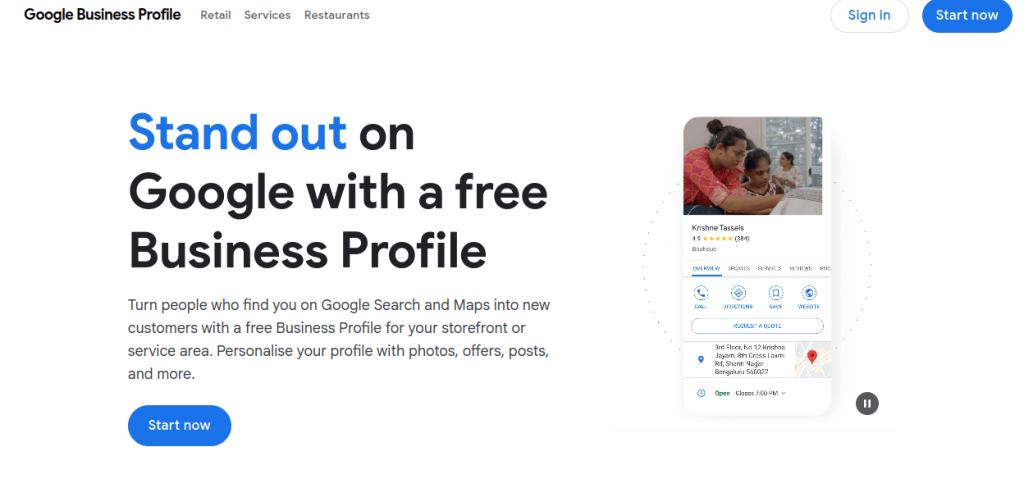
When we talk about Google Reviews for Businesses, we’re discussing far more than a simple five-star rating system. This is Google’s integrated feedback mechanism that appears across Search, Maps, and your Google Business Profile. Every review carries weight in multiple dimensions: it influences where you rank in search results, shapes customer perceptions, and provides invaluable insights into your operations.
The mechanics are straightforward but powerful. Customers who have interacted with your business can leave ratings and written feedback that become permanently attached to your digital identity. These reviews appear when someone searches for your business name, your service category, or even generic terms related to what you offer. According to recent data from Trustmary, 81% of consumers read reviews specifically on Google before making purchase decisions, making this platform the undisputed leader in online reputation management.
What sets Google Reviews for Businesses apart from other review platforms is its integration with the world’s dominant search engine. When 73% of all online reviews live on Google (as reported by Embed Social’s research), businesses that master this platform gain disproportionate visibility and credibility advantages.
The Numbers Don’t Lie: Statistics That Prove the Impact
Let’s cut through the noise and look at hard data that demonstrates why Google Reviews for Businesses deserves your immediate attention and ongoing investment.
Research from Wiser Review reveals that 87% of customers engage with businesses that maintain a 3-4 star average rating. Notice the range—you don’t need perfection. You need authenticity and volume. This same research shows that 73% of consumers only trust reviews written in the last month, highlighting the critical importance of maintaining fresh, recent feedback as part of your review management strategy.
The connection between customer reviews and physical traffic is equally compelling. Data shows that 58% of customers report that having an optimized Google Business Profile increases their physical visits to brick-and-mortar locations. For service businesses, this translates directly to more appointments, consultations, and sales opportunities.
Perhaps most striking is the behavior pattern before purchase. According to Demand Sage,consumers read an average of 7 reviews before trusting a business. Furthermore,54.7% of customers check at least 4 product reviews before making a purchase decision. These numbers reveal a clear message: reviews are not optional features of your online reputation management plan. They are essential components that directly influence your bottom line.
| Review Statistic | Impact | Source |
| 89% of consumers search online reviews before purchasing | Massive influence on purchase decisions | Trustpilot Research |
| 73% of reviews are hosted on Google | Google dominates review landscape | EmbedSocial Study |
| 87% engage with 3-4 star average businesses | Perfect ratings may seem suspicious | WiserReview Data |
| 73% only trust reviews from last month | Recency is critical | WiserReview Research |
| 67% prefer Google for writing reviews | Google is the go-to platform | WiserNotify Study |
The data is clear: Reviews drive revenue
You’ve seen the statistics. Now see the results with Yuko review management
The Local SEO Connection You Cannot Ignore
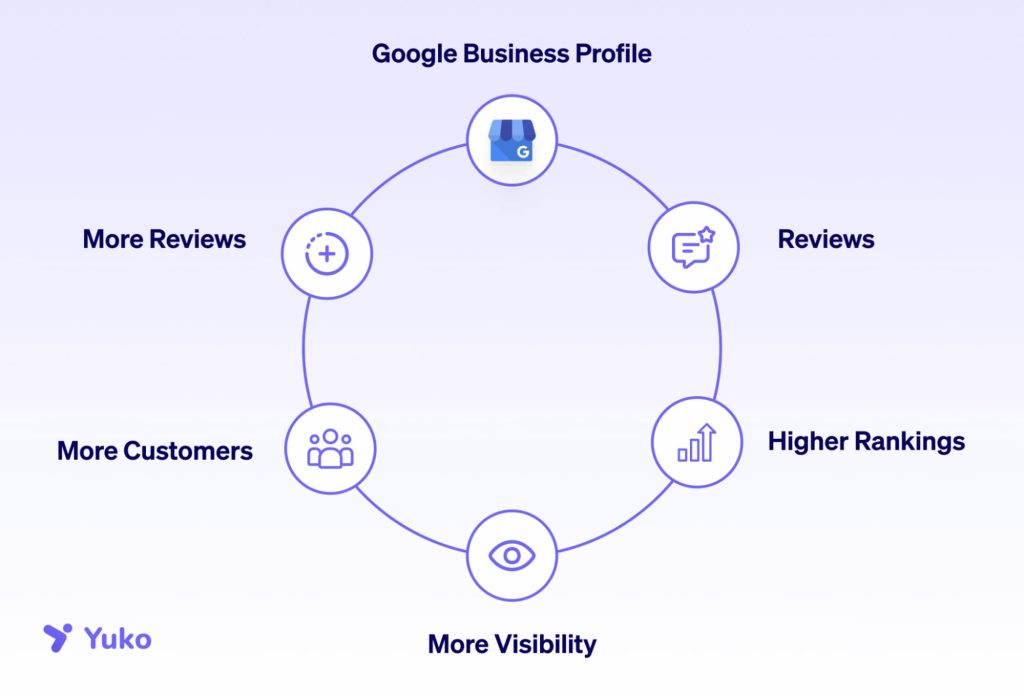
Google Reviews for Businesses plays a pivotal role in local SEO performance, and understanding this connection is essential for any business targeting local customers. Search engines use reviews as a key ranking signal to determine which businesses deserve prominent placement in search results.
According to Local Falcon’s analysis, reviews have become more influential than ever in local SEO. Search engines now evaluate review quantity, quality, and recency as critical ranking factors. The PromoRepublic research indicates that reviews make up 16% of local pack and finder rankings, making them one of the most significant factors you can actively influence.
Google’s algorithm evaluates your review profile through multiple lenses. First, it considers review volume. Businesses with consistent review flow signal active customer engagement. Second, it analyzes review quality and sentiment, using sophisticated language processing to understand what customers actually say about you. Third, it weighs review recency heavily, which explains why businesses with recent feedback often outrank competitors with more total reviews but less current activity.
The mechanism works through Google’s three core local ranking factors: relevance, proximity, and prominence. Your review profile directly impacts prominence, the measure of how well-known and trusted your business appears. Strong customer reviews signal to Google that your business deserves higher visibility because real people vouch for your quality.
Backlinko’s comprehensive local SEO guide confirms that solid ratings can be the difference between getting clicked or getting skipped in competitive markets. This is particularly true for the coveted “map pack” results that appear at the top of local searches, where only three businesses earn prominent placement.
Building an Effective Review Management Strategy
Creating a sustainable approach to Google Reviews for Businesses requires systematic thinking rather than sporadic efforts. The most successful businesses treat review generation as an integral part of their customer experience, not an afterthought.
The foundation starts with delivering service worth talking about. This might sound obvious, but it’s worth emphasizing: no amount of clever review solicitation can compensate for mediocre experiences. Your first priority is creating moments that naturally motivate customers to share positive feedback.
Timing matters enormously. Research shows that 69% of modern consumers leave reviews if prompted by brands. The optimal moment to request a review is shortly after a successful transaction or positive interaction, when satisfaction is peak and the experience is fresh. Wait too long, and the moment passes. The customer moves on, and your opportunity vanishes.
Make the process friction-free. Provide direct links to your Google review page through email follow-ups, text messages, or QR codes on receipts. Every additional step between the request and the review reduces completion rates. Tools that automate review requests while maintaining personalization can dramatically improve response rates without increasing workload.
However, never violate Google’s policies by offering incentives for reviews. This includes discounts, freebies, or entry into contests. Google actively polices these violations and can penalize your entire profile. Focus instead on making the request compelling through genuine appreciation and making it easy through streamlined processes.
Your online reputation management approach should include monitoring across multiple platforms. While Google dominates with 73% of all reviews, businesses also need presence on industry-specific platforms. The key is consistency. Your Google Business Profile should serve as your primary focus, with secondary attention to relevant vertical platforms where your customers naturally congregate.
Every day without a systematic review strategy is a day your competitors gain ground. While you’re reading this, local businesses using Yuko
The Psychology Behind Customer Reviews
Understanding why people leave customer reviews helps you design better processes for encouraging them. Human behavior around reviews follows predictable patterns that smart businesses can leverage.
Social proof drives significant review behavior. People trust the experiences of strangers because we’re hardwired to follow the crowd when uncertain. This explains why 85% of consumers trust online reviews as much as personal recommendations. Your existing reviews create a snowball effect. Each new review makes the next one more likely because potential reviewers see an established pattern of feedback.
The reciprocity principle also plays a role. When businesses provide exceptional service, customers often feel a sense of Start Nowobligation to reciprocate by sharing positive experiences. This is why service-focused businesses often generate more organic reviews than transactional product sellers.
Interestingly, negative experiences motivate review-writing more strongly than positive ones, which is why proactive solicitation is crucial. You need to actively encourage satisfied customers to share their experiences to balance the natural tendency of unhappy customers to speak up. The good news is that when asked, happy customers readily comply. Data shows that 71% will submit a review after being satisfied if the company makes it easy.
Optimizing Your Google Business Profile for Maximum Impact
Your Google Business Profile serves as the container for your reviews and the foundation of your local SEO presence. Optimization starts with completeness and accuracy. Every field you fill, every photo you upload, and every post you create strengthens your profile’s effectiveness.
Category selection deserves special attention. Your primary category should precisely match your core offering, while secondary categories can expand your visibility for related searches. Choosing categories too broadly dilutes your relevance. Choosing too narrowly limits your reach. Strike the balance by understanding exactly what terms your customers use when searching for your services.
Visual content matters more than many businesses realize. According to Red Local SEO research, 92% of consumers find photos on Google reviews useful. Upload high-quality images of your location, products, services, and team. Include photos in varied lighting conditions and angles to provide comprehensive visual context.
Your business description should incorporate relevant keywords naturally while maintaining readability. Avoid keyword stuffing, which appears spammy to both Google and potential customers. Instead, write clear, compelling copy that explains what makes your business unique and why someone should choose you.
Business hours deserve meticulous attention. Inaccurate hours frustrate customers and signal unreliability to Google’s algorithm. Update your profile promptly for holidays, seasonal changes, or any schedule modifications. The PromoRepublic analysis notes that accuracy in business hours is crucial for both local SEO and customer trust.
Regular posts keep your profile active and engaging. Share updates, offers, events, and news to give visitors fresh reasons to interact with your profile. These posts appear in your listing and can improve engagement metrics that influence rankings.
Mastering the Art of Review Responses
How you respond to customer reviews matters as much as the reviews themselves. Your responses are visible to everyone who views your profile, making them powerful online reputation management tools.
Responding to positive reviews serves multiple purposes. It shows appreciation for customer loyalty, encourages future reviews by demonstrating you value feedback, and provides an opportunity to reinforce key messages about your business. Keep positive responses brief, genuine, and varied. Template responses appear lazy and reduce the authenticity that makes reviews powerful.
Negative reviews require more sophisticated handling. According to Ranko Media, 45% of consumers say they’re more likely to visit a business that responds to negative reviews. This is because thoughtful responses demonstrate accountability and commitment to customer satisfaction.
When addressing negative feedback, follow this framework:
- Acknowledge quickly – Research shows 53% of customers expect responses to negative reviews within a week. Speed signals that you take concerns seriously.
- Apologize sincerely – Even if you disagree with the criticism, acknowledge the customer’s disappointment. “I’m sorry you had this experience” works when specific apologies don’t fit.
- Take responsibility – Avoid defensiveness or excuses. Own the problem and explain what you’ll do differently.
- Move offline – Provide contact information to resolve the issue privately. This shows good faith while preventing public back-and-forth that damages your image.
- Follow through – If you promise action, deliver it. Many negative reviews convert to positive updates when businesses genuinely address problems.
Remember that every review response is an opportunity to showcase your values and professionalism to potential customers reading your profile.
Common Mistakes That Undermine Review Success
Even businesses that understand the importance of Google Reviews for Businesses often sabotage their efforts through preventable mistakes.
The most common error is inconsistency. Businesses launch review campaigns with enthusiasm, then let them fade as daily operations take priority. Building a strong review profile requires sustained effort over months and years, not bursts of activity followed by neglect.
Ignoring negative reviews is equally damaging. Some businesses hope bad reviews will disappear if ignored. They don’t. They sit prominently in your profile, signaling to potential customers that you don’t care about problems. The absence of response speaks volumes about your commitment to customer satisfaction.
Soliciting reviews too aggressively backfires. Bombarding customers with multiple requests or pressuring them during transactions creates negative associations. The request should feel like an invitation, not an obligation.
Failing to make the process easy costs you reviews. If customers need to search for your profile or navigate multiple steps, many will abandon the process. Provide direct, simple paths to your review page.
Focusing solely on volume while neglecting quality leaves opportunities on the table. Five detailed reviews with specific praise often outperform twenty generic “great service” comments. Encourage customers to share specific details about their experiences.
Finally, neglecting to integrate reviews into your broader marketing misses powerful opportunities. Customer reviews provide authentic testimonials for your website, social media, and marketing materials. Highlighting great reviews amplifies their impact beyond your Google Business Profile.
Measuring What Matters: Review Performance Metrics
Effective review management strategy requires tracking the right metrics to understand performance and guide improvements. Here are the key indicators that matter:
- Review Volume Growth – Track how many new reviews you receive monthly. Establish baseline numbers and set realistic growth targets. Businesses with 200 or more reviews see significantly higher revenue, according to Trustmary research.
- Average Rating Trends – Monitor not just your current rating but the trend line. Is your average climbing, declining, or stable? Sudden drops signal problems requiring immediate attention.
- Review Recency – Given that 73% of consumers only trust recent reviews, measure how many reviews you’ve received in the past 30 days. This is often more important than total review count.
- Response Rate and Speed – What percentage of reviews receive responses, and how quickly? High response rates (aim for 100%) and fast response times (within 24-48 hours) improve customer perception and local SEO performance.
- Sentiment Analysis – Look beyond star ratings to understand what customers actually say. Are certain themes emerging in feedback? Positive patterns reveal your strengths. Negative patterns highlight areas needing improvement.
- Conversion Impact – Track whether review improvements correlate with increased inquiries, website traffic, or sales. Use UTM parameters and conversion tracking to quantify review impact on your business goals.
- Competitive Benchmarking – Compare your review profile against local competitors. Are you outperforming or falling behind in volume, rating, or recency? Competitive analysis reveals opportunities and threats in your market.
The Role of Reviews in Building Long-Term Brand Value
Beyond immediate local SEO and conversion benefits, Google Reviews for Businesses creates lasting brand equity that compounds over time. Your review profile becomes a permanent record of customer satisfaction that follows your business indefinitely.
This accumulated feedback serves as market validation. New customers see not just recent reviews but a history of consistent service quality. A profile with hundreds of positive reviews signals stability and reliability that newer businesses cannot match.
Reviews also provide continuous learning opportunities. Customer feedback reveals unexpected use cases, highlights underappreciated features, and identifies friction points you might otherwise miss. Smart businesses mine review content for product development, service improvements, and marketing messaging insights.
The transparency of public reviews, including occasional negative feedback, actually enhances credibility. Research confirms that perfectly rated businesses sometimes appear suspicious. A 4.2 to 4.7 average rating with mixed reviews appears more authentic and trustworthy than a suspicious 5.0 from limited reviews.
If you want to know how to get more reviews , refer this article from Google: Guide to getting more review
Adapting Your Strategy as the Landscape Evolves
The importance of Google Reviews for Businesses continues growing as Google refines its algorithms and consumers become increasingly review-dependent. Staying ahead requires adapting to emerging trends.
- Mobile optimization has become critical. The majority of review reading and writing happens on mobile devices. Ensure your review request process works flawlessly on smartphones, and optimize your Google Business Profile for mobile viewing.
- Video content in reviews is gaining traction. While not yet mainstream, video reviews provide richer, more compelling social proof. Consider encouraging satisfied customers to include video content when leaving feedback.
- AI-powered sentiment analysis tools help businesses monitor reviews at scale and identify patterns human readers might miss. These tools can flag concerning trends early and highlight opportunities to amplify positive themes.
- Integration with customer relationship management systems allows automated review requests triggered by specific customer journey milestones. This ensures consistent outreach without manual effort.
- Voice search optimization matters because many local searches now happen through voice assistants. Questions like “What’s the best coffee shop near me?” rely heavily on review signals to provide answers.
Taking Action: Your 30-Day Review Transformation Plan
Knowledge without execution changes nothing. Here’s a practical roadmap to transform your approach to Google Reviews for Businesses starting today:
Week 1: Foundation
- Claim and verify your Google Business Profile if not already done
- Complete every field in your profile with accurate, keyword-rich information
- Upload 10-20 high-quality photos representing your business
- Review your current review profile and note areas for improvement
Week 2: Process Development
- Design a review request process that triggers after positive customer interactions
- Create email and text templates for review requests
- Generate a direct link to your Google review page
- Train staff on the importance of reviews and how to request them appropriately
Week 3: Active Response
- Respond to every existing review, starting with recent ones
- Develop response templates for common review types
- Address any outstanding negative reviews with genuine solutions
- Set up notifications so you’re alerted to new reviews immediately
Week 4: Optimization and Scaling
- Implement systematic review solicitation with your first 20 customers
- Begin tracking key metrics in a simple spreadsheet
- Schedule weekly profile updates with new posts or photos
- Analyze early results and refine your approach based on what’s working
This plan provides momentum while avoiding overwhelming yourself with too much at once. The goal is building sustainable habits rather than pursuing unsustainable sprints.
Your Reputation Starts Today
Google Reviews for Businesses represents one of the few marketing channels where small businesses can compete effectively with larger competitors. Your review profile is built one customer at a time, through consistent delivery of quality experiences and systematic solicitation of feedback.
Your competitors are reading this same data and making their own review strategies. The question is not whether you’ll prioritize Google Reviews for Businesses, but whether you’ll start before or after they do. The most expensive reviews are the ones you never asked for from satisfied customers who would have gladly shared their experiences.
Begin today. Start with your most recent satisfied customer. Send a personal note thanking them for their business and asking if they’d share their experience on Google. That single review starts the momentum that transforms your online reputation from an afterthought into a competitive advantage that drives growth for years to come.
Frequently Asked Questions
You can start seeing benefits from your first review, but research shows significant milestones at 10 reviews (initial trust boost), 50 reviews (competitive credibility), and 100+ reviews (substantial ranking improvement). The average local business has 39 Google reviews, while top-ranking businesses average 47 reviews. However, quality and recency matter just as much as quantity.
Surprisingly, a rating between 4.2 and 4.7 stars is ideal. While a perfect 5.0 might seem best, it can appear suspicious to consumers. Research shows that 87% of customers engage with businesses that have a 3-4 star average rating. A slightly imperfect rating with mixed reviews appears more authentic and trustworthy.
You should request reviews systematically after every positive customer interaction, but timing matters. Ask within 24-48 hours after service completion when the experience is fresh. Only 19% of customers leave reviews unprompted, but 69% will leave a review if asked. Make it part of your standard post-service follow-up process.
Focus on making the process easy and timely:
1. Send personalized review requests within 24-48 hours of service
2. Provide direct links to your Google review page
3. Train staff to mention reviews during positive interactions
4. Use QR codes on receipts or business cards
5. Follow up via email or text with clear instructions
Never offer incentives, discounts, or rewards for reviews as this violates Google’s policies and can result in penalties.
You cannot delete legitimate negative reviews. However, you can flag reviews that violate Google’s policies (fake reviews, spam, hate speech, conflicts of interest). Google will investigate and remove policy-violating content. Your best strategy is to respond professionally to negative reviews and demonstrate your commitment to customer satisfaction. 45% of consumers are more likely to visit businesses that respond to negative reviews.

