
SAPO: Many Shopify merchants believe they just need more traffic to grow, but expensive visitors who only buy one product quickly drain their margins. The real growth lever isn’t more clicks. It’s getting each shopper to add a few extra items before checkout. Smart product bundling helps you do that naturally without pushing too hard. This guide will help you understand the logic behind profitable bundles and 7 proven strategies to instantly boost your AOV. Let’s stick around til the end.
What Makes a “Good” Bundle on Shopify?
A strong product bundle works well for your business and your customers. To strike that balance, you need to design bundles that protect your margins, move inventory efficiently, and feel undeniably valuable to shoppers.
Table of contents
The business side: margins, inventory, AOV
- Profitability: A good bundle should keep your margins healthy even when offering a light discount (around 10–15%). The goal is to increase the total order size to raise your profit per transaction.
- Inventory impact: Use bundles strategically to move slower‑selling SKUs or to boost attach rates for accessories and add‑on items. This helps clean up your inventory while improving product mix.
- Average Order Value (AOV): Every bundle campaign should aim for a measurable lift in AOV — not just selling one extra item but pushing each cart’s total value up by a specific percentage benchmark.
The customer side: relevance, clarity, perceived value
- Logical combination: A great bundle feels purposeful and solves a complete job‑to‑be‑done, such as a “Full Skincare Routine Kit” or “Coffee Starter Set.”
- Clear savings: Shoppers should instantly understand what they save compared to purchasing the items individually (both in money and convenience).
- Social proof: Display reviews or testimonials for individual products within the bundle (or for the bundle itself) to build trust and make the offer more convincing.
Core Bundling Strategies Every Shopify Store Should Test
1. “Frequently Bought Together” Bundles
Frequently Bought Together (FBT) bundles combine products that customers frequently purchase together in the same order. Because these recommendations are based on real buying patterns rather than arbitrary promotion, they tend to feel helpful rather than sales-driven. Consequently, FBT bundles often perform well when placed near the product page call-to-action or within the cart drawer as a quick add-on option.
This approach works best for stores that sell complementary products, where multiple items are typically needed to complete a use case. Beauty routines, kitchen tools, home cleaning products, and pet supplies are especially strong categories because customers naturally combine items to solve a single problem.
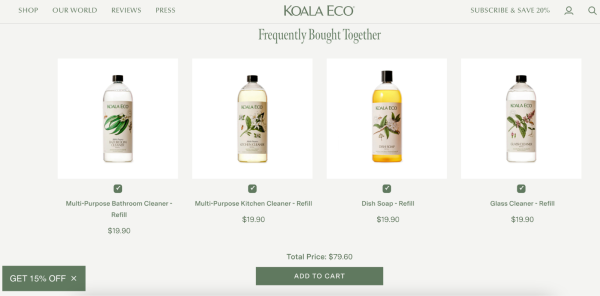
As you can see in the Koala Eco example, the product page recommends several refill cleaners that customers commonly buy together, such as bathroom cleaner, kitchen cleaner, dish soap, and glass cleaner. Instead of pushing a predefined kit, the interface lets shoppers quickly add commonly paired items with a single click. This small convenience subtly increases basket size while still giving the shopper control.
Implementation approach:
- Analyze co-purchase data from Shopify analytics or bundling apps to identify strong product pairings.
- Display the bundle directly below the Add to Cart button or near the purchase section for visibility.
- Show the combined total price and savings to reinforce value.
- Run A/B tests comparing single product upsells vs. bundle recommendations.
2. Build-Your-Own Bundle (Builder Bundle Page)
Build Your Own Bundle lets shoppers assemble their own product set from a curated selection. This structure adds an element of personalization, which is particularly valuable for brands offering many flavors, scents, colors, or similar variations. When customers can mix and match products, the bundle feels tailored rather than predetermined.
This strategy is effective when products share a similar price range, and customers often want to try several variants. Snack, supplement, and beauty brands often benefit from this model.
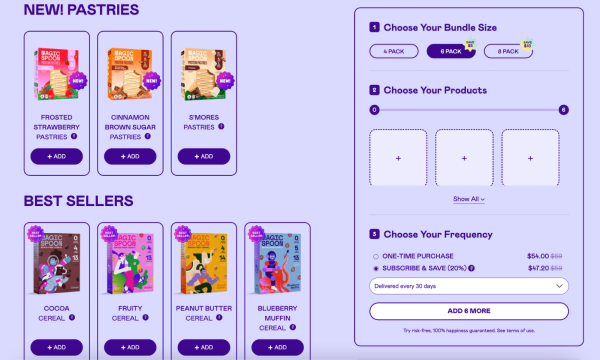
A clear example appears in Magic Spoon’s interface. Customers first choose a bundle size, such as a 4-pack or 6-pack, and then fill each slot with their preferred cereal flavors. The progress indicator shows how many items have been selected, making the process intuitive and encouraging shoppers to complete the bundle.
Implementation approach:
- Define the minimum and maximum item quantities customers can choose.
- Display a progress indicator such as “You’ve selected 2 of 6 items.”
- Highlight popular products with labels like Bestseller, New, or Staff Pick.
- Show the bundle discount or price tier clearly as selections increase.
3. Complementary “Solution” Bundles
Solution bundles combine multiple products into a complete routine designed to address a specific problem or goal. This format positions the brand as a trusted guide rather than simply a product seller. Customers benefit from a clear recommendation, which reduces decision fatigue and increases confidence in the purchase.
This strategy works particularly well for brands that promote structured routines or systems, such as skincare, wellness programs, or hobby equipment.
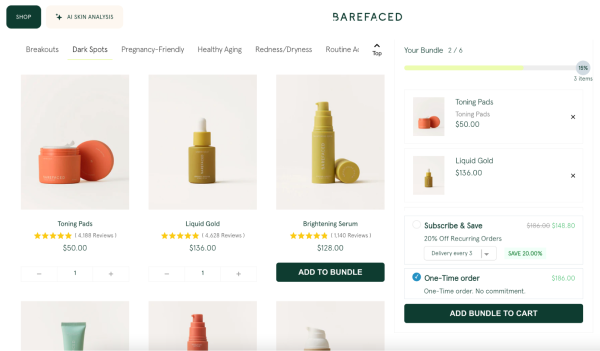
The bundle interface from Barefaced clearly illustrates this concept. Products are grouped by skin concerns, such as dark spots or aging. Customers can build a routine using compatible products while seeing the bundle price update in real time. A subscription option is also available for recurring replenishment, reinforcing long-term product usage.
Implementation approach:
- Create 2–3 solution bundles with tiered options such as Basic, Complete, and Pro.
- Include lifestyle images showing the entire routine together.
- Use testimonials that emphasize results achieved with the full product system.
- Feature bundles in a dedicated “Kits & Bundles” collection.
4. Volume/ Tiered Quantity Bundles
Volume bundles encourage customers to purchase multiple units by offering progressively better value as quantity increases. This format works especially well for consumable products because customers are comfortable stocking up when savings are clear.
The strategy is most suitable for categories such as supplements, personal care, coffee, or pet products, where repeat purchases are expected.
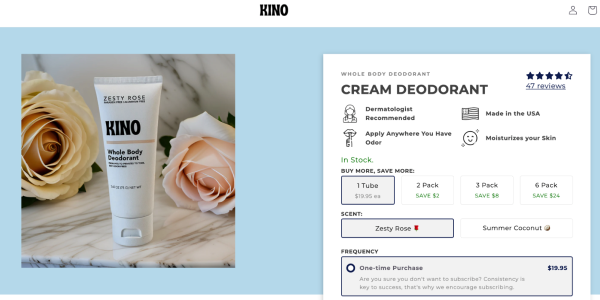
The Kino product page demonstrates this approach effectively. Customers can choose between 1, 2, 3, or 6 deodorant tubes, with larger packs offering greater savings. The tiered layout communicates value immediately and gently nudges customers toward higher quantity options.
Implementation approach:
- Display tier options next to the product price.
- Highlight the most attractive tier with messaging like “Best Value.”
- Test different discount structures while maintaining margins.
- Consider offering additional units rather than deeper discounts when feasible.
5. Gift Box Bundle
Gift bundles combine several products into a curated set designed specifically for gifting occasions. Presentation plays a significant role here, since the bundle is positioned as an experience rather than a simple product combination.
This model works well for brands selling premium consumables or lifestyle goods where packaging enhances perceived value.
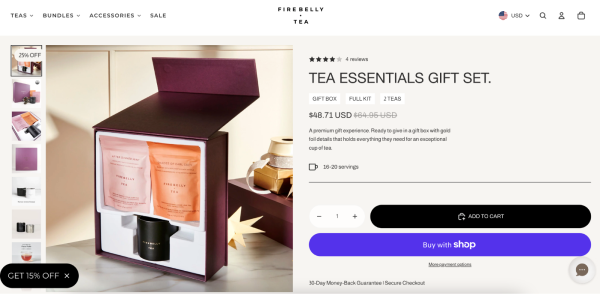
The Tea Essentials Gift Set from Firebelly Tea provides a strong example. The set includes multiple tea blends and accessories presented in an elegant box designed for gifting. The product page emphasizes the experience of opening the set and enjoying the teas, making it an appealing choice for customers shopping for gifts.
Implementation approach:
- Design premium packaging or gift-ready boxes.
- Include multiple complementary products that create a complete experience.
- Emphasize the gifting narrative in product descriptions and imagery.
- Promote bundles during holiday and seasonal campaigns.
6. Seasonal & Themed Bundles
Seasonal bundles group products around a specific occasion, theme, or time of year. This approach allows brands to highlight relevant products without applying storewide discounts. Limited availability also introduces a sense of urgency that can drive conversions.
Seasonal bundles work particularly well for stores that regularly run marketing campaigns tied to holidays or lifestyle themes.
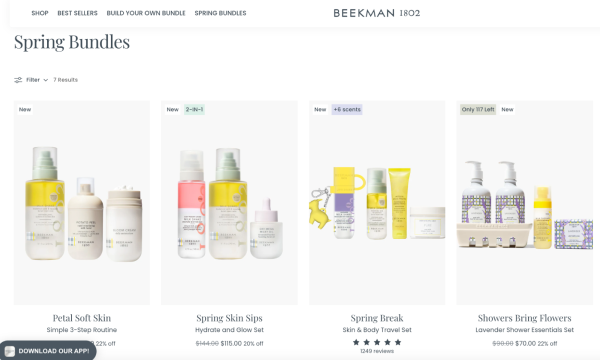
The product collections from Beekman 1802 demonstrate this strategy through themed skincare sets released throughout the year. These bundles showcase several products together while reinforcing the seasonal narrative. Customers browsing the collection quickly understand the purpose of each bundle and are encouraged to try multiple items at once.
Implementation approach:
- Select 3–5 products that fit the campaign theme.
- Design dedicated landing pages for seasonal bundle collections.
- Add urgency messaging, such as limited-time availability.
- Drive traffic through email marketing and paid ads.
7. Subscription-Friendly Bundles
Subscription-friendly bundles are designed around a predictable usage cycle. Instead of immediately pushing a recurring subscription, brands often introduce bundles that align with a specific consumption period. Once customers become familiar with the bundle, transitioning to a subscription becomes a natural next step.
This strategy works best for products consumed consistently, such as snacks, coffee, supplements, or pet supplies.
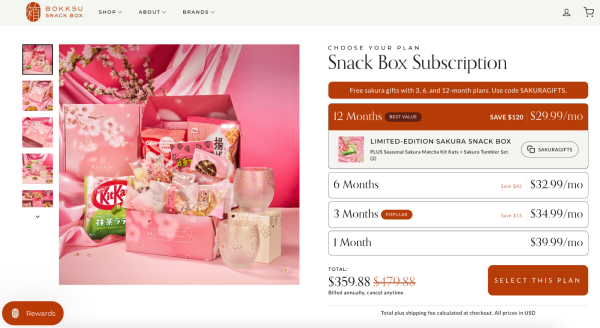
A well-known example comes from Bokksu. The company offers curated snack boxes delivered monthly, with customers choosing plans ranging from 1 to 12 months. Each box introduces new snacks while maintaining the convenience of automatic delivery, which strengthens retention and repeat purchases.
Implementation approach:
- Design bundles that match a realistic usage cycle (30, 60, or 90 days).
- Introduce bundles as starter kits before subscription offers.
- Use post-purchase emails to convert repeat buyers into subscribers.
- Provide small subscription incentives such as free shipping or bonus items.
Top 3 Shopify Bundle Apps to Maximize Your AOV
1. BOGOS: Free Gift, Bundle Upsell
- Best for: Advanced promotions (BOGO, gift with purchase, fully customizable bundle flows)
- Pricing plan: Free plan available; paid plans from ~$29.99 → $109.99/month (based on order volume)
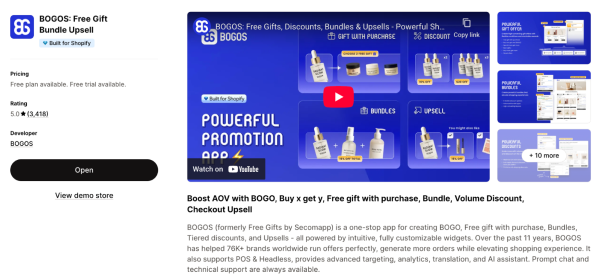
BOGOS is a powerful all-in-one promotion engine that goes far beyond basic bundling. It combines BOGO, free gifts, upsells, and bundle builders into a single system, making it ideal for stores that want to maximize AOV with sophisticated offer logic.
BOGOS key features:
- Multiple Bundle Types: Create classic bundles, mix & match options, frequently bought together suggestions, and interactive bundle builder pages for complete customer customization
- Flexible Bundle Pricing: Offer percentage discounts, fixed amount reductions, fixed bundle prices, free gifts as bundle rewards, or combine with free shipping for maximum appeal
- Smart Bundle Display: Present bundles on dedicated bundle builder pages, product pages via widgets, or through cart popups for optimal visibility
- Progressive Bundle Tiers: Set quantity-based volume discounts (e.g., buy 2 save 10%, buy 3 save 20%) to encourage bulk purchases and higher order values
- Custom Bundles: Let shoppers build their own bundles from curated product selections with mix & match functionality for personalized shopping experiences
- Volume Discounts: Create quantity break promotions that incentivize customers to purchase more items for better pricing
- Auto Inventory Sync: Automatically synchronize bundle inventory across all component products to prevent overselling and maintain accurate stock levels in real-time
- Bundle Analytics: Track bundle performance, conversion rates, average order value impact, and revenue attribution through comprehensive dashboards
- Advanced Bundle Targeting: Restrict bundle availability to specific customer segments, locations, purchase history, or unique URLs for exclusive promotional campaigns
- Customizable Bundle Widgets: Design bundle displays, product grids, and promotional blocks that seamlessly match your brand aesthetic and integrate with your theme
- AI-Powered Recommendations: Leverage intelligent frequently bought together suggestions that adapt based on customer browsing and purchase patterns
- Other Promotion types: Gift with purchase, BOGO, thạnk-you page upsell, checkout upsell, Discount on cheapest / most expensive item.
For smaller stores or simple use cases, the pricing can feel higher than that of more lightweight tools.
2. Fast Bundle | Product Bundles
- Best for: Stores that need multiple bundle types with strong performance and scalability
- Pricing plan: Free to install; paid plans from ~$19 → $139/month (based on bundle revenue)
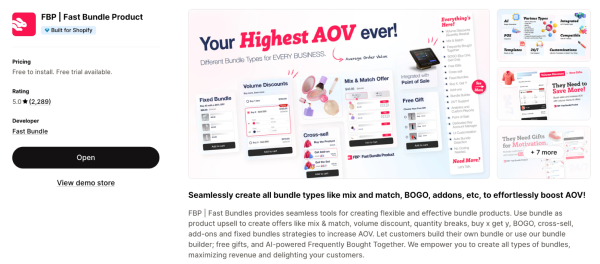
Fast Bundle is a highly flexible bundling app that supports nearly every bundling strategy in one place. It stands out for combining performance optimization with a wide range of bundle formats, making it a strong fit for growing stores.
Bundle features:
- AI-powered Frequently Bought Together: Smart recommendations based on purchase behavior
- Mix & Match builder: Customers create their own bundles with variant-level selection
- Volume pricing engine: Tiered discounts with “best value” highlighting
- Subscription bundle support: Combine bundles with recurring purchase models
- In-cart & product page widgets: Seamless upsell placement across the funnel
- Multi-language & POS support: Works well for international and omnichannel stores
The interface is more functional than design-driven, so deep UI customization is somewhat limited compared to premium apps.
3. Bundler – Product Bundles
- Best for: Budget-conscious stores that want simple, effective bundling without complexity
- Pricing plan: Free plan available; paid plans from ~$9.99 → $19.99/month
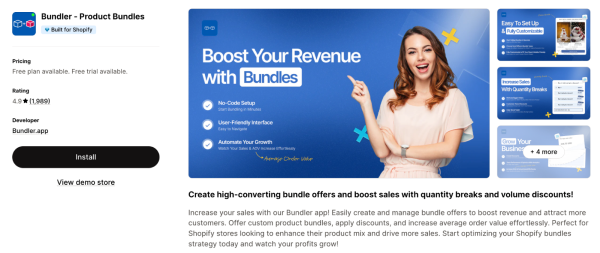
Bundler focuses on simplicity and affordability while still covering the core bundling use cases. It’s a solid entry-level option for merchants who want to launch bundle offers quickly without the complexity of setup.
Bundle features:
- Classic bundle builder: Create fixed bundles with percentage or fixed discounts
- Mix & Match bundles: Allow customers to choose variants within a bundle
- Quantity/volume discounts: Incentivize bulk purchases with tiered pricing
- Buy X Get Y offers: Basic promotional logic for upsells
- Bundle landing pages: Dedicated pages to showcase offers
- Built-in analytics (premium): Track bundle performance and revenue impact
As your store scales, you may find the customization and advanced funnel control somewhat limited for more complex campaigns.
Final Thought
To wrap things up, great bundles don’t feel like promotions. They feel like helpful suggestions that fully address the customer’s needs. When you design them with both margins and user experience in mind, bundling can quietly become one of the most reliable growth levers for your Shopify store.
FAQs
Yes, but it has strict limits. Shopify offers a free “Shopify Bundles” app, but it limits you to 30 products and 100 variant combinations per bundle. For advanced strategies like Mix & Match or tiered volume discounts, you will need a third-party app like BOGOS.
Yes. However, instead of offering volume discounts (like “buy 3 couches”), high-ticket stores should focus on “Solution Bundles.” This means pairing the main expensive item with essential accessories or extended warranties.
Yes. Pairing a stagnant, slow-moving item with a popular best-seller at a slight discount is one of the most effective strategies for clearing out dead stock without incurring a massive financial loss.
Yes. Setting your free shipping threshold just slightly above your average bundle price is a powerful psychological trigger that significantly increases the likelihood that customers will add more items to their cart.

