
Not being transparent about affiliate marketing is not only illegal, but unethical. With an affiliate disclosure example, you can prove how it improves not only trust but also click-through rate.
In this blog, you will learn,
- Customizable affiliate marketing disclaimer template
- Real-world examples of affiliate marketing disclosure
- Strategies for affiliate disclaimer placement with platform-specific tips
Table of contents
- What Is an Affiliate Disclosure and Why Is It Required?
- What Happens If You Don’t Include a Disclosure?
- Who Needs to Use Affiliate Disclosures?
- How To Write an Affiliate Disclosure (With Templates)
- 10 Real Affiliate Disclosure Examples from Top Brands
- Best Practices for Writing Affiliate Disclosures in 2025
- Conclusion
- Frequenty Asked Questions:
Build Trust While Scaling Referral Revenue with Yuko Affiliate Marketing All-in-One Shopify Solution.
What Is an Affiliate Disclosure and Why Is It Required?
An affiliate disclosure is a short note that tells your audience that you earn commissions from the sale of the products you recommend.
It is a legal obligation that you are open specifically whenever you have a financial relationship with companies you promote. Hence, this includes affiliate links, sponsored content, and paid partnerships.
Regulatory boards like the Federal Trade Commission (FTC) or other government organizations monitor this.
The rule is straightforward: if money is exchanged because of your recommendation, you must disclose it. Therefore, the affiliate link disclaimer applies whether you’re promoting Amazon products or any other affiliate program.
An affiliate disclosure example for Amazon might look like this:
“As an Amazon Associate, I earn from purchases when you click through my links.”
What Happens If You Don’t Include a Disclosure?
Failing the affiliate compliance can affect you in more than one way. The consequences aren’t just a warning, but real and expensive.
The FTC can fine you up to $43,792 per violation. Consequently, every single undisclosed affiliate link could trigger a separate penalty.
Apart from legal risks, your reputation will take a hit. Your audience expects honesty. Thus, when they discover hidden affiliate marketing disclaimer relationships, they will lose trust instantly.
Affiliate compliance isn’t optional. It’s an important part of affiliate communication. The government’s definition of affiliate disclosure is simple: transparency protects both businesses and consumers.
Additionally, search engines like Google also penalize undisclosed affiliate content. Google’s algorithms favor transparent, helpful content over hidden commercial relationships.
Who Needs to Use Affiliate Disclosures?
Anyone earning money from recommendations needs to use affiliate marketing disclosure.
Here is a list of people who must include affiliate link disclosure:
- Content creators
- Bloggers and website owners
- YouTube creators and podcasters
- Social media influencers
- Email newsletter publishers
- Course creators and coaches
- Review site operators
Influencer partnerships of any size require disclosure. Hence, it doesn’t matter if you have 100 followers or 100,000; the rules apply equally.
For example, an affiliate disclosure example on Instagram is required even for stories and casual posts. Thus, platform size doesn’t determine disclosure requirements.
Just ask yourself, “Are you getting paid or receiving free products in exchange for promotion?” If yes, you need an affiliate link disclaimer.
How To Write an Affiliate Disclosure (With Templates)
To write an effective disclosure of affiliate partnerships doesn’t require legal expertise.
These affiliate disclaimer example templates work across industries:
1. Keep it Simple and Direct
Put a straightforward and free-of-any-fluff affiliate disclaimer. Thus, you can know your intention fast. It works well with blogs, newsletters, and product reviews.
“As an affiliate marketer, I will be paid a sum of money through this promotion when you click or purchase with this link.”
2. Make It Conversational and Relatable
If your brand tone you use is friendly or casual, then use a warm and human voice. Hence, this style of affiliate disclosure is useful for lifestyle blogs, social media, or YouTube descriptions.
“Hey! Just so you know, certain links on this post are Affiliate links. This implies that I could make a little commission when you decide to purchase. Buy it now (unless it is not the right product for you)!”
3. Use a Professional Tone for Formal Brands
A formal affiliate declaration should be used if you are directly related to finance, technology, or health. Therefore, use professional words that convey transparency and trustworthiness.
“Disclosure: This is an affiliate link. We can earn a commission when you click links to products and purchase. It helps us keep producing quality content.”
4. Include Specific Wording for Amazon Compliance
In case you have an Amazon Associates account, the wording they provide should be used in the example of the Amazon affiliate disclosure to avoid any sort of trouble.
“As an Amazon Associate and affiliate marketer, I earn from qualifying purchases through links in this content.”
10 Real Affiliate Disclosure Examples from Top Brands
Here are affiliate disclosure examples from industry leaders:
1. Wirecutter

Wirecutter posts many blogs related to products, comparisons, reviews, etc. Along with their thoughts, their blog also includes links to the affiliate products they are discussing.
They clearly explain in not more than two simple lines that even though their reviews are independent, they make money from the purchase using those affiliate links.
In Wirecutter’s affiliate disclosure example, they have always placed the disclosure statement at the top of the blog. In addition, they have added a hyperlink to the “About us” page. Thus, customers can learn about this referral marketing in depth if interested.
2. The Points Guy
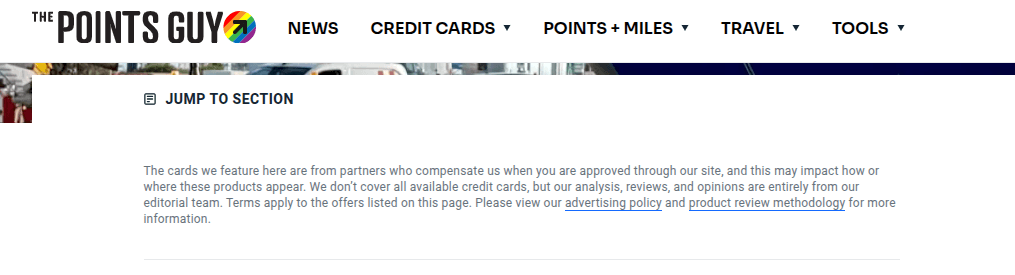
They are one of the most sought-after travel-based content creators. Their influencer marketing is spread across various platforms. Thus, they have a dedicated audience.
While they have also placed the affiliate disclaimer at the top of the blog, they have a more detailed disclosure.
They warn that they don’t cover all credit cards for analysis to practice transparency and prevent future conflict. In addition, they also encourage reading their advertising policy and the methodology used for reviewing.
3. Do It On A Dime
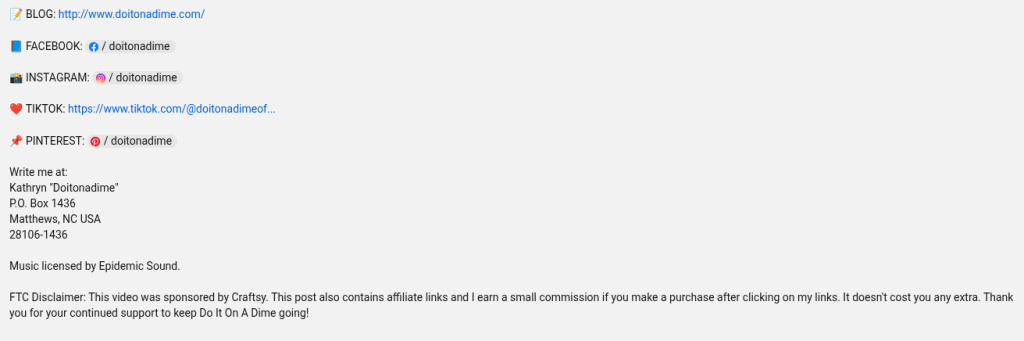
It is a popular affiliate disclosure example from a YouTube channel.
The FTC affiliate disclaimer is placed at the bottom of the description following the affiliate links.
Moreover, the disclaimer statement reveals how the video is sponsored. Thus, it is established that not only affiliate links but also sponsored content must be disclosed.
4. The DIY Nuts
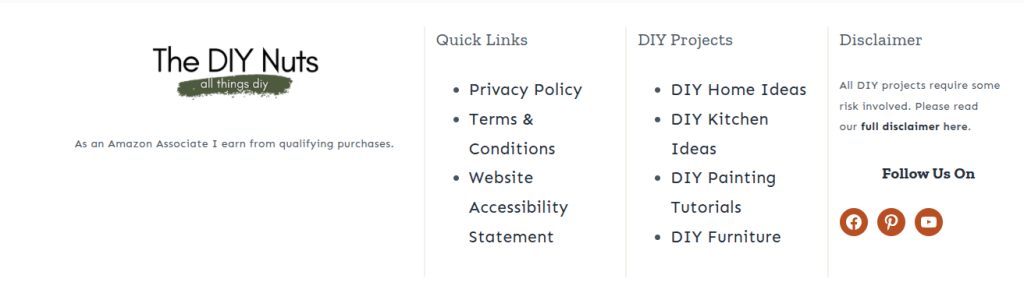
Apart from every post and platform, they have a universal disclosure on their footer for everyone to see. This conveys their association with Amazon and is also visible in every single post.
Such an affiliate example for disclosure is useful if your whole business is related to affiliate marketing or association with a partner like Amazon.
Automate Commission Calculations + Disclosure Management. Grow Your Affiliate Network 3x Faster with Yuko Affiliate Marketing.
5. Baden Silva

Baden Silva’s posts have good examples of affiliate disclosure on Instagram. Unlike blogs or websites, on Instagram, affiliate disclosure can be simply conveyed using the #ad or #collab, or #sponsored hashtag.
Moreover, these hashtags not only convey partnership marketing examples, but also any kind of collaboration and sponsored posts.
6. Remodelaholic

They deal with many recommendation listicles and how-to DIY articles related to remodeling a house. So, they talk about a lot of products they use.
In this affiliate example for disclosure, they have added the statement after the introduction of the blog. Furthermore, it is a simple one-line disclaimer for affiliate marketing along with a link to their full detailed page.
By adding disclosure of affiliates in between your blog can ensure your audience son’t skip it.
7. Ken’s Tech Tips

In a unique approach to affiliate disclosure, this tech blogger has placed affiliate disclosure in two places: the introduction of the page and the header of every individual page.
Usually, tech-related influencers recommend and review all new gadgets. Hence, they tend to use affiliate marketing the most.
As a result, using disclosure on every page with ‘*’ to indicate the affiliate links is a wise idea to not confuse the readers while following the rules.
Related Reading: Learn more about influencers and their work from our blog: A Beginner’s Guide to Micro and Nano Influencers in 2025
8. Young House Love

With recommendations of beautiful items needed for a beautiful home, Young House Love includes referral links in almost all their posts.
As a result, they have included the affiliate disclaimer in their introduction and pinned it to every page.
In addition, they have also added this disclaimer to the bottom of every blog post.
Such examples of including affiliate disclosure in multiple places on a page are good practice. Furthermore, many mentions will ensure the audience doesn’t miss the information.
9. SmartBlogger
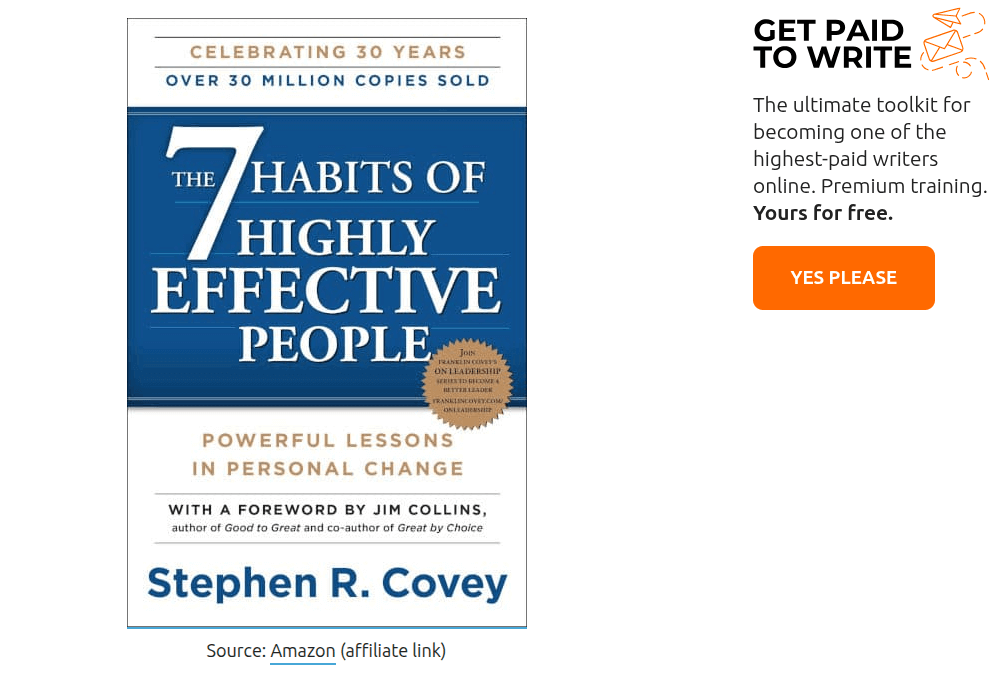
A blog that helps people become smart will obviously use the right positioning of affiliate links to earn more.
They have a simple approach to affiliate disclosure. They just mention near the link that it is an affiliate link. In simple terms, it conveys how clicking on a link will be monetized.
10. CryptoVantage

A blog that helps people make financial decisions. Their affiliate disclosure is placed at the bottom of the page, but it’s detailed and thorough.
Moreover, it’s paired with an investment disclaimer to build trust and manage reader expectations in a high-risk niche like crypto.
Their message is clear and responsible. Thus, it works best. Thus, any reader can understand what’s happening.
Best Practices for Writing Affiliate Disclosures in 2025
Best affiliate disclaimer strategies must balance compliance with user experience.
Hence, here are the best practices for writing affiliate disclosure:
1. Keep It Short, Clear, and Upfront
Long disclosures get ignored. Subsequently, effective disclosures must communicate quickly and clearly.
What works:
- Use plain English (avoid legal jargon)
- Stay under 50 words when possible
- Mention with the key fact: “I earn commissions.”
- Place disclosures before affiliate content
What doesn’t work:
- Burying disclosures in lengthy legal text
- Placing disclosures only in footers
- Creating separate disclosure pages without prominent links
2. Match Tone to Your Audience
Your affiliate disclosure should sound like you wrote it, not your lawyer.
- Finance and business: Professional, straightforward tone.
- Lifestyle and personal: Casual, friendly approach
- Tech reviews: Transparent, detailed explanations
3. Be Transparent
Affiliate disclosure must be visible easily and not hidden. Specifically, the FTC warns against:
- Footer-only disclosures
- Pop-up disclosures that close automatically
- Disclosures requiring additional clicks
- Disclaimer in matching background colors
Hence, based on the best affiliate disclosure examples, do the following:
- Use contrasting colors for disclosure text
- Place disclosures above the fold
- Repeat disclosures on long-form content
- Test disclosure visibility on mobile devices
4. Adapt for Each Channel and Affiliate Program
Different platforms and affiliate marketing strategies require specific approaches:
YouTube specifics:
- Include disclosures in video descriptions
- Add verbal disclosures in video content
- Use #ad or #affiliate hashtags
- Pin disclosure comments when relevant
Instagram requirements:
- Use #ad, #affiliate, or #sponsored hashtags
- Include disclosures in caption text (not just hashtags)
- Add disclosures to Stories highlights
- Disclose in bio for consistent affiliate content
Amazon program requirements:
Amazon’s affiliate marketing disclosure example must include specific language acknowledging the Amazon Associates program.
Other Platform-specific considerations:
- Pinterest: Add disclosures to pin descriptions
- TikTok: Include disclosures in video text or descriptions
- LinkedIn: Use professional disclosure language
- Email: Include disclosures in newsletters and automated sequences
Centralized Affiliate Management & Compliance. Focus on Growth With Yuko Affiliate Marketing.
Conclusion
An effective affiliate disclosure example is meant to protect your business while building audience trust. Thus, be honest and don’t skip them.
Use the templates and strategies in this blog to create disclosures that work for your brand.
Moreover, you can test disclosure placement across all channels. Additionally, update disclosures when joining new affiliate programs.
- Related reading
Master Shopify Influencer Marketing: A Complete Guide - Yuko Shopify Plus loyalty checkout extension
- Top Must-Read Books for Affiliate Marketing Success
- Compliance: Complete Guide for Brand Owners (2025)
Frequenty Asked Questions:
Yes, affiliate disclosure must appear on every single post containing affiliate links. Moreover, the FTC requires disclosure wherever affiliate content appears. Hence, you cannot stop with a single site-wide disclosure.
Asymbols or asterisks alone don’t meet affiliate program requirements. Hence, it is good to use clear language like “affiliate link” or “I earn commissions.”
You can use comprehensive language like “This post contains affiliate links from multiple programs, including Amazon Associates” in your affiliate marketing disclaimer. Thus, disclosure of multiple affiliate program links will be easy.
A disclaimer limits legal liability while a disclosure reveals financial relationships. Most affiliate disclosure examples focus on transparency about earning commissions.
Yes, each region has specific requirements for affiliate disclosure. The UK requires “clear and prominent” disclosures, Canada needs “material connection” statements, and the EU requires GDPR-compliant transparency. Thus, always research local affiliate marketing campaign regulations.