
Starting an online store feels exciting until you face the theme selection screen. With thousands of options promising to boost conversions, increase sales, and create stunning designs, how do you actually choose? The right theme can make the difference between a store that struggles and one that thrives, yet most entrepreneurs pick based on aesthetics alone, ignoring critical factors like loading speed, mobile performance, and conversion optimization.
Table of contents
- Quick Statistics Shaping Theme Selection
- Understanding Fast Shopify Themes and Why Speed Matters
- 13 Best Shopify Themes
- 1. Dawn – The Free Champion Taking Over Shopify
- 2. Booster – The Conversion Machine Worth Every Penny
- 3. Studio – Where Art Meets Ecommerce
- 4. Turbo – Built for Stores That Think Big
- 5. Prestige – Luxury Positioning Through Design
- 6. Sense – Clean Beauty and Wellness Aesthetic
- 7. Debut – The Reliable Workhorse (For Existing Stores)
- 8. Flex – Ultimate Customization Freedom
- 9. Taste – Minimalist Product Focus
- 10. Impact – High-Volume Product Showcase
- 11. Refresh – Modern Simplicity Evolved
- 12. Craft – Artisan and Handmade Specialist
- 13. Ride – Adventure and Outdoor Brand Energy
- Choosing Between Free Shopify Themes and Premium Options
- Special Considerations for Shopify Themes for Dropshipping
- Fashion-Specific Considerations: Shopify Themes for Fashion Stores
- Making Your Final Theme Decision
- Your Theme Choice Matters, But It Doesn’t Define Success
- Frequently Asked Questions
The numbers tell a compelling story about why theme selection matters. Currently, 5.8 million live Shopify stores compete for customer attention, with the platform powering approximately 28% of all eCommerce websites in the United States according to recent market data.
Your theme creates the first impression, influences whether visitors trust your brand, and ultimately determines if browsers become buyers. Research shows that 97% of consumers are influenced by website design when making purchasing decisions, making your theme choice one of the most impactful decisions you’ll make.
This article cuts through the marketing hype to reveal the best Shopify themes based on actual performance data, user feedback, and conversion metrics. We’ve organized them by category so you can quickly find options matching your specific needs, whether you’re launching a fashion boutique, running a dropshipping operation, or building a luxury brand. Each theme includes honest pros and cons, pricing information, and ideal use cases to help you make an informed decision.
Quick Statistics Shaping Theme Selection
Understanding current market conditions helps contextualize theme importance. Here are critical statistics informing smart theme decisions:
- Only about 1.5% of Shopify sites run custom themes according to BuiltWith data, meaning 98.5% of stores use pre-built options. This demonstrates that successful businesses can absolutely thrive using themes rather than expensive custom development.
- Custom theme adoption has risen from 1.35% in 2020 to 1.53% in 2024 according to Uptek theme statistics, showing that while custom builds remain rare, they’re gradually becoming more accessible to growing businesses
- 100+ themes available – according to WebFX statistics, breaking down to 23 free and 245 premium options as of mid-2025
Understanding Fast Shopify Themes and Why Speed Matters
Site speed influences virtually every metric mattering to online retailers. The connection between loading times and conversion rates follows clear patterns: faster sites convert better, rank higher in search results, and create more positive customer experiences.
When evaluating fast Shopify themes, look beyond marketing promises to actual performance data. Google’s PageSpeed Insights, GTmetrix, and similar tools provide objective measurements. The best themes consistently achieve high scores across multiple testing platforms.
Speed optimization happens on multiple levels. Clean, efficient code forms the foundation. Image optimization, lazy loading, and minimized JavaScript execution prevent unnecessary slowdowns. The best themes build these optimizations in rather than requiring you to add them through apps later.
Consider that the median Shopify theme achieves about 93.9% of stores passing Largest Contentful Paint benchmarks. Themes performing above this median give your store competitive advantages. Those falling below your success regardless of how attractive they look.
Mobile speed deserves separate attention since cellular connections vary significantly. Test potential themes on actual mobile devices using standard cellular data rather than just WiFi. Slow mobile experiences drive customers away before they even see your products.
13 Best Shopify Themes
1. Dawn – The Free Champion Taking Over Shopify
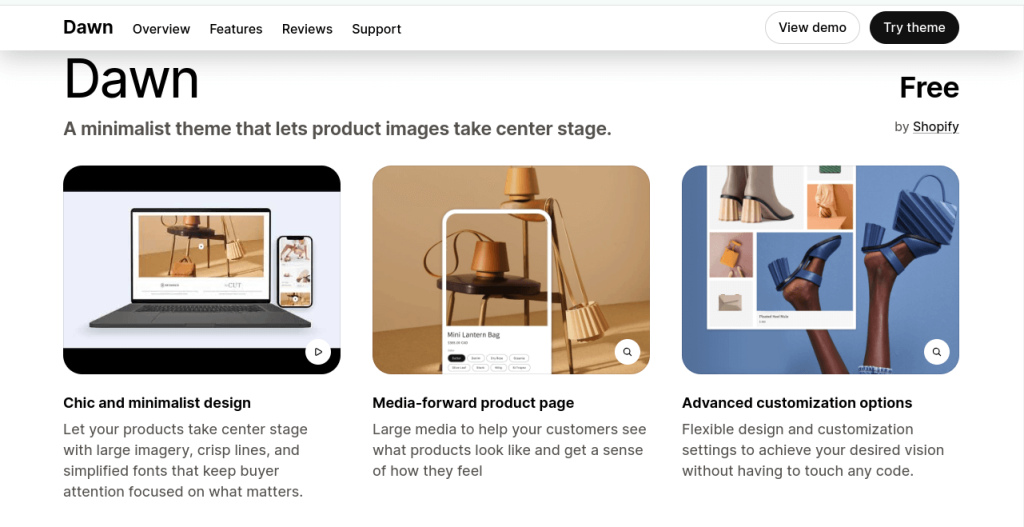
Dawn currently dominates as the most popular theme, used by 23.4% of all Shopify stores according to Store Leads data. This free theme from Shopify’s own design team proves you don’t need expensive premium options to create professional, high-converting stores.
Key Features:
- Lightning-fast loading speeds that boost search rankings
- Minimalist design putting products front and center
- Drag-and-drop customization requiring zero coding
- Mobile-optimized for smartphone shoppers
- Product filtering and predictive search built in
- Customizable sections for flexible layouts
Perfect For: Fashion boutiques, beauty brands, home decor shops, and any business with clean product photography
Pricing: Completely free
Why It Works: Dawn strips away unnecessary clutter, letting your products shine. The minimalist aesthetic appeals to modern consumers who value simplicity. More importantly, the theme loads incredibly fast, which search engines reward with better rankings and visitors reward with higher conversion rates. The median Shopify theme achieves about 93.9% of stores passing core speed benchmarks, and Dawn consistently performs at the top of this range.
The Catch: While Dawn offers excellent foundations, stores with massive product catalogs might find its simple navigation limiting. Businesses needing advanced filtering for hundreds of products should consider more robust options.
2. Booster – The Conversion Machine Worth Every Penny
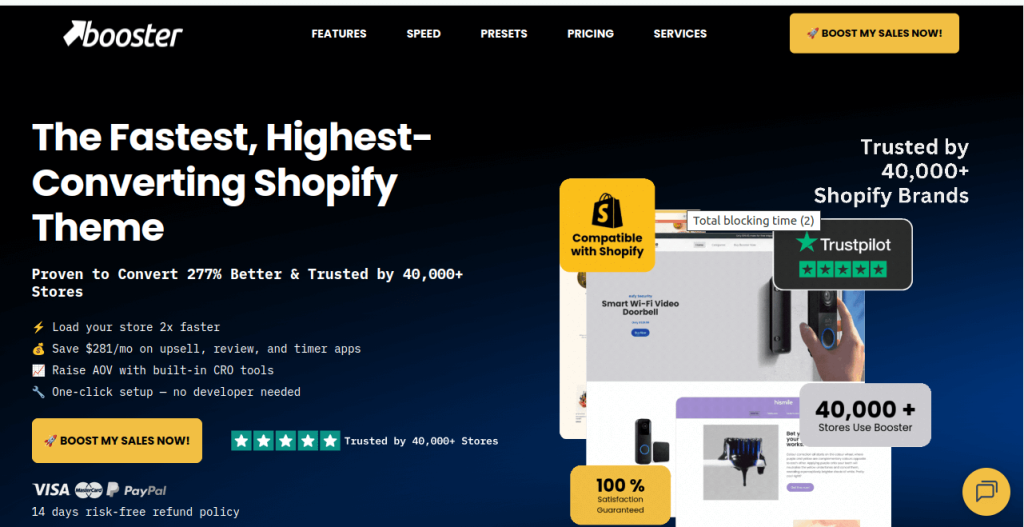
When experienced Shopify merchants discuss themes that actually increase sales, Booster inevitably enters the conversation. This premium theme packs features that typically require multiple paid apps, making the upfront investment pay for itself quickly.
Key Features:
- Over 80 industry-specific preset designs
- Built-in image optimization reducing file sizes
- Lazy loading for faster perceived speed
- Countdown timers creating purchase urgency
- Recent sales notifications providing social proof
- Copycat prevention protecting your content
- Smart product recommendations increasing order values
Perfect For: Serious entrepreneurs focused on maximizing conversions across any product category
Pricing: Premium theme (one-time purchase around $299)
Why It Works: Booster combines technical excellence with psychological triggers that nudge visitors toward purchasing. The theme achieves impressive performance scores on both desktop and mobile devices, maintaining fast speeds that keep visitors engaged. Integration with popular apps like TinyIMG and PageFly happens seamlessly, and the conversion-focused features replace expensive standalone tools you’d otherwise need.
The Catch: The extensive feature set means a steeper learning curve initially. New store owners might feel overwhelmed by all the customization options available.
3. Studio – Where Art Meets Ecommerce
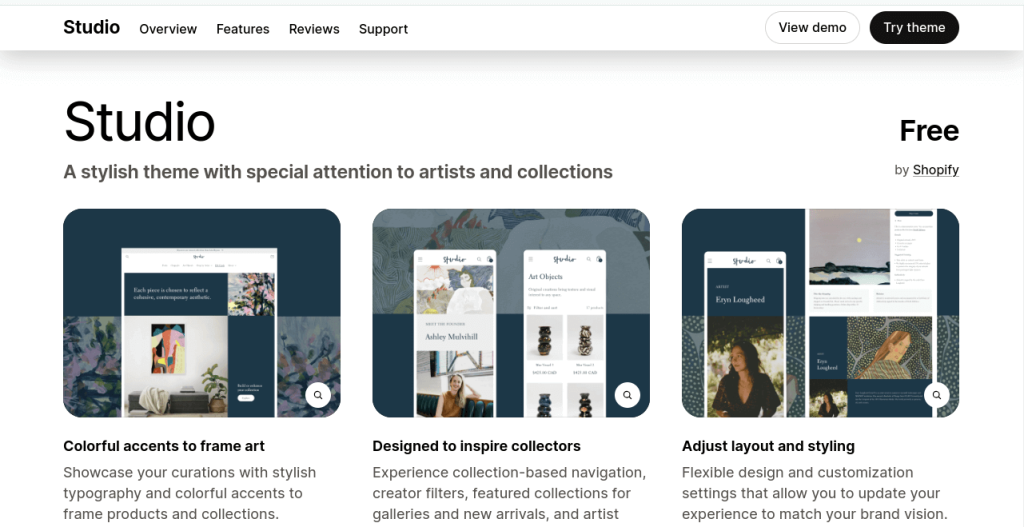
Artists, photographers, and creative brands need themes showcasing their work as beautifully as gallery exhibitions. Studio delivers this experience completely free, making professional presentation accessible to creative entrepreneurs on any budget.
Key Features:
- Full-screen image displays maximizing visual impact
- Integrated lookbook functionality for styled collections
- Video support for storytelling content
- High-resolution image handling with rollover effects
- Artist profile sections for personal branding
- Sticky navigation keeping menus accessible
- Collection-based browsing for related items
Perfect For: Handmade jewelry designers, photographers, artists, custom furniture makers, limited-edition print sellers
Pricing: Free
Why It Works: Studio understands that for creative products, presentation equals value perception. The theme treats each product page like an exhibition piece, giving customers space to appreciate details and craftsmanship. This approach resonates with buyers who value artistry and are willing to pay premium prices for unique items.
The Catch: The visual-heavy approach requires excellent product photography. Stores with mediocre images won’t benefit from Studio’s capabilities and might actually highlight quality gaps.
4. Turbo – Built for Stores That Think Big
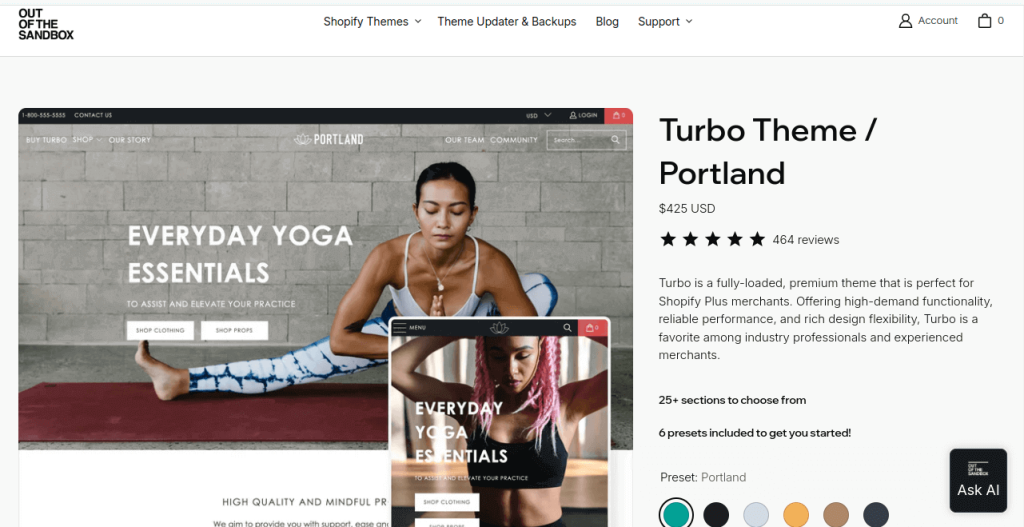
Managing hundreds or thousands of products creates challenges that standard themes can’t handle effectively. Turbo specifically addresses high-volume retail operations, making it the go-to choice for growing stores outgrowing simpler options.
Key Features:
- Advanced filtering systems for large catalogs
- Faceted search narrowing results by multiple criteria
- Collection pages handling extensive inventories smoothly
- Multiple layout variations for different page types
- Custom CSS support for specific branding needs
- Fast loading despite catalog size
- Wholesale pricing functionality
Perfect For: Large retailers, wholesale operations, multi-brand stores, marketplace-style shops
Pricing: Premium theme ($380)
Why It Works: Turbo maintains speed and usability even when catalogs grow massive. The sophisticated filtering helps customers find exactly what they want without drowning in options. Store owners appreciate how the theme stays organized as they add categories, variants, and new product lines. Out of the Sandbox, Turbo’s developer, maintains the theme actively with regular updates.
The Catch: Smaller stores with limited catalogs won’t utilize Turbo’s advanced features fully, making the investment harder to justify compared to simpler, less expensive alternatives.
5. Prestige – Luxury Positioning Through Design
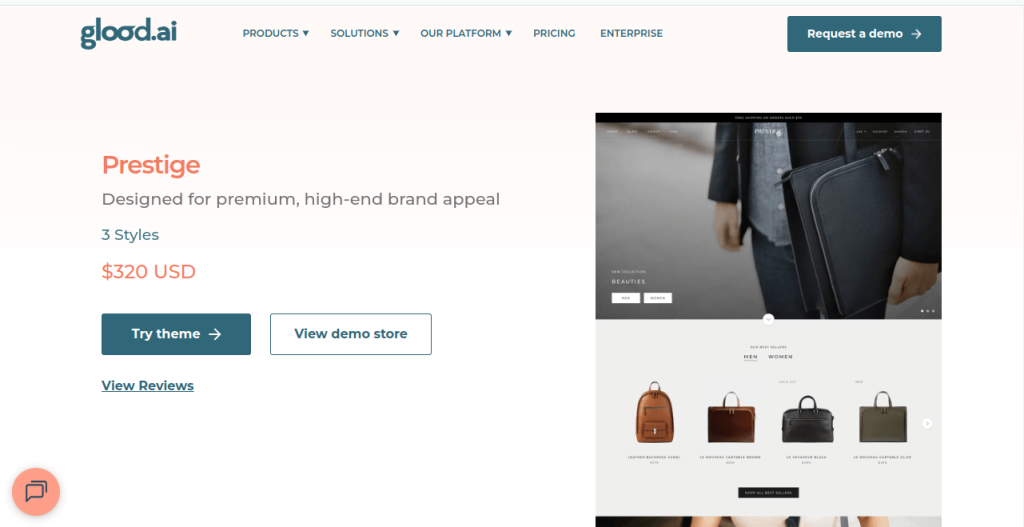
Premium pricing strategies require presentation justifying higher prices. Prestige delivers the sophisticated aesthetic that luxury fashion, high-end jewelry, and exclusive lifestyle brands need to command premium margins.
Key Features:
- Large hero images creating powerful first impressions
- Video integration for immersive storytelling
- Advanced product galleries showing multiple angles
- Size guide integration
- Promotional banner sections
- Look builder for outfit combinations
- Instagram feed integration
Perfect For: Luxury fashion, high-end jewelry, exclusive lifestyle brands, premium beauty products
Pricing: Premium theme ($380)
Why It Works: Every design element communicates quality and exclusivity. Typography choices, spacing, animations, and transitions all work together creating an elevated experience that prepares customers for premium pricing. The theme includes 1,388 Shopify Plus stores in its user base, demonstrating its appeal to established, successful brands.
The Catch: The sophisticated design requires professional photography and polished product descriptions. Rushed content or amateur images clash with the premium aesthetic and can actually hurt conversions.
6. Sense – Clean Beauty and Wellness Aesthetic
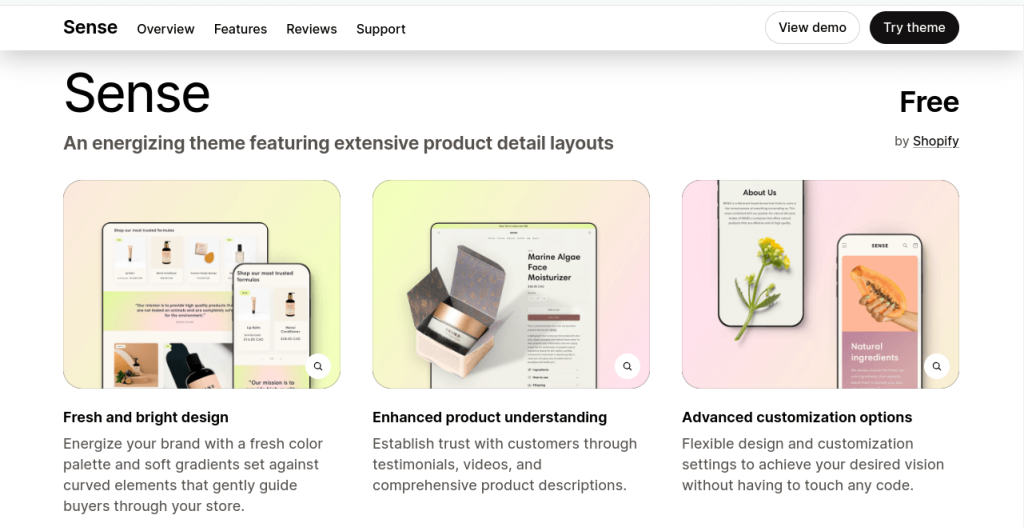
Health, beauty, and wellness brands need themes that feel fresh, clean, and trustworthy. Sense achieves this through modern design and strategic white space usage, all while remaining completely free.
Key Features:
- Modern, clean layout emphasizing products
- Excellent mobile responsiveness for smartphone shopping
- Product recommendation sections
- Promotional banner placements
- Streamlined navigation preventing overwhelm
- Visual storytelling capabilities
- Review integration for social proof
Perfect For: Skincare brands, supplement companies, wellness products, beauty retailers
Pricing: Free
Why It Works: The clean aesthetic aligns perfectly with health and wellness brand positioning. Customers shopping for products they’ll put on or in their bodies prioritize trust, and Sense’s professional appearance helps establish credibility immediately. The mobile experience particularly shines since beauty and wellness shoppers frequently browse on phones.
The Catch: The minimalist approach might feel too simple for brands wanting more personality or unique visual identities. Customization options exist but within certain aesthetic boundaries.
7. Debut – The Reliable Workhorse (For Existing Stores)
While Debut no longer ships as Shopify’s default theme, 7.5% of Shopify stores still use it according to WebFX data. This speaks to its reliability and functionality for businesses that don’t need cutting-edge features.
Did you know ? : Debut isn’t really ‘gone’ for any serious reason.Shopify simply chose to retire themes built on their older architecture and replace them with newer, more modern ones
Key Features:
- Slideshow homepage sections
- Product filtering capabilities
- Predictive search functionality
- Mobile-responsive design
- Simple customization options
- Clean product display
- Cart drawer for streamlined checkout
Perfect For: Established stores already using Debut, businesses prioritizing stability over new features
Pricing: Free
Why It Works: Debut delivers solid fundamentals without complications. The straightforward interface makes management easy, and the theme’s maturity means most compatibility issues have been resolved. Store owners who’ve built successful businesses on Debut often hesitate switching since everything works smoothly.
The Catch: Newer free themes like Dawn offer more modern features and better performance. Starting fresh stores have little reason to choose Debut over more current alternatives unless specific features appeal.
8. Flex – Ultimate Customization Freedom
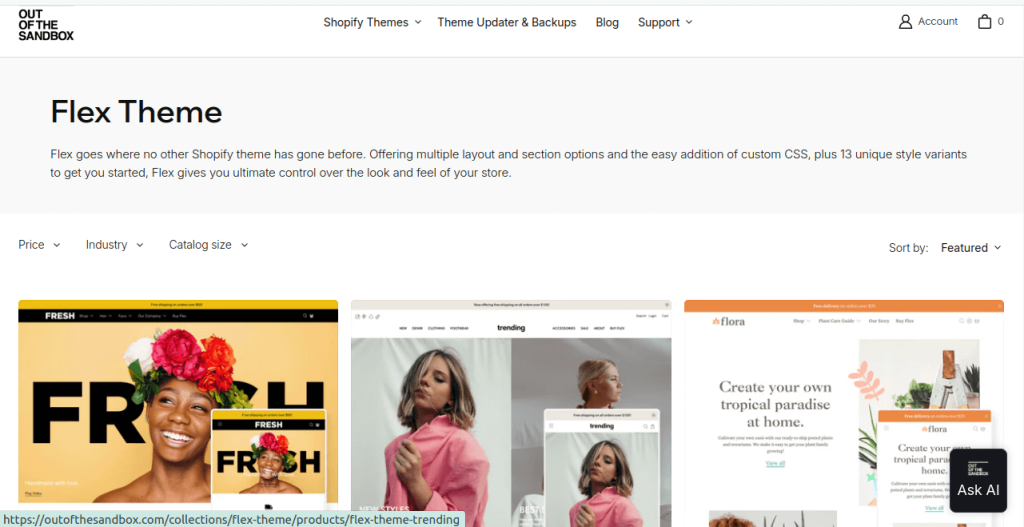
Some businesses need themes adapting to their exact vision rather than fitting into predefined styles. Flex provides this flexibility through 13 unique style variants and extensive customization options, though at a premium price.
Key Features:
- 13 pre-designed style variants across niches
- Unlimited configuration possibilities
- Custom CSS support for advanced users
- Flexible layouts adjusting to content needs
- Multiple homepage design options
- Advanced navigation structures
- Product video support
Perfect For: Brands with strong visual identities, businesses wanting unique designs, stores needing specific functionality
Pricing: Premium theme ($450)
Why It Works: Flex essentially provides multiple themes in one package. The style variants span everything from minimalist modern to bold and colorful, giving starting points that can be customized further. Businesses investing in professional designers appreciate how Flex accommodates custom requirements without fighting against theme limitations.
The Catch: The extensive options mean complexity. Without design expertise or professional help, you might struggle utilizing Flex’s full capabilities. The high price point also demands justification through actual business results.
9. Taste – Minimalist Product Focus
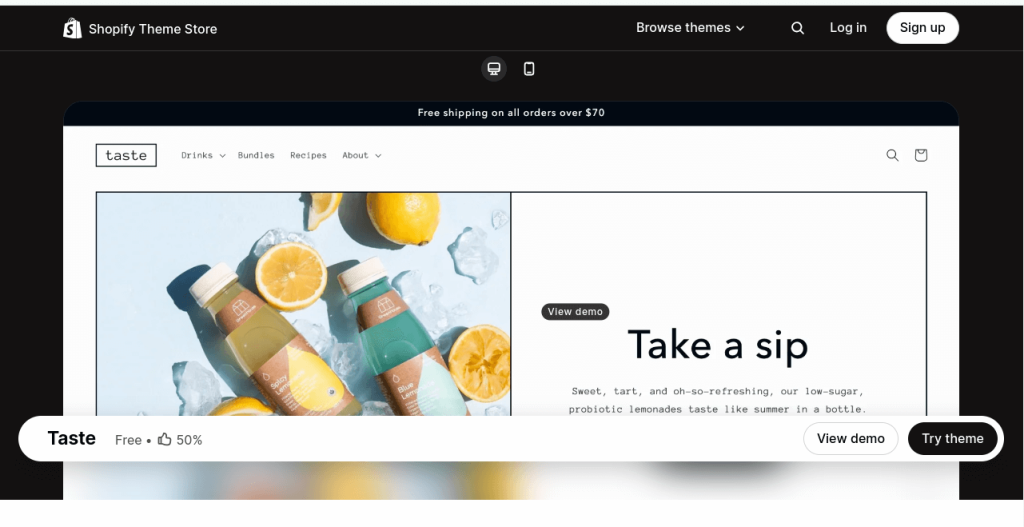
Product-focused businesses want themes keeping attention on what they sell rather than distracting with unnecessary design elements. Taste delivers minimalist elegance perfect for stores where products speak for themselves.
Key Features:
- Large, engaging product images
- Clean navigation preventing confusion
- Mobile-first responsive design
- Slideshow functionality
- Product recommendations
- Promotional banner sections
- Fast loading performance
Perfect For: Food products, artisan goods, single-product stores, businesses with striking product photography
Pricing: Free
Why It Works: Taste gets out of the way, letting products capture attention. The modern, uncluttered aesthetic appeals to contemporary consumers who value simplicity. User testing revealed impressive mobile responsiveness, critical since mobile commerce continues growing. The minimalist approach also contributes to fast loading speeds that improve both user experience and search rankings.
The Catch: Brands needing personality or distinctive visual identities might find Taste too neutral. The theme works best when products themselves provide visual interest.
10. Impact – High-Volume Product Showcase
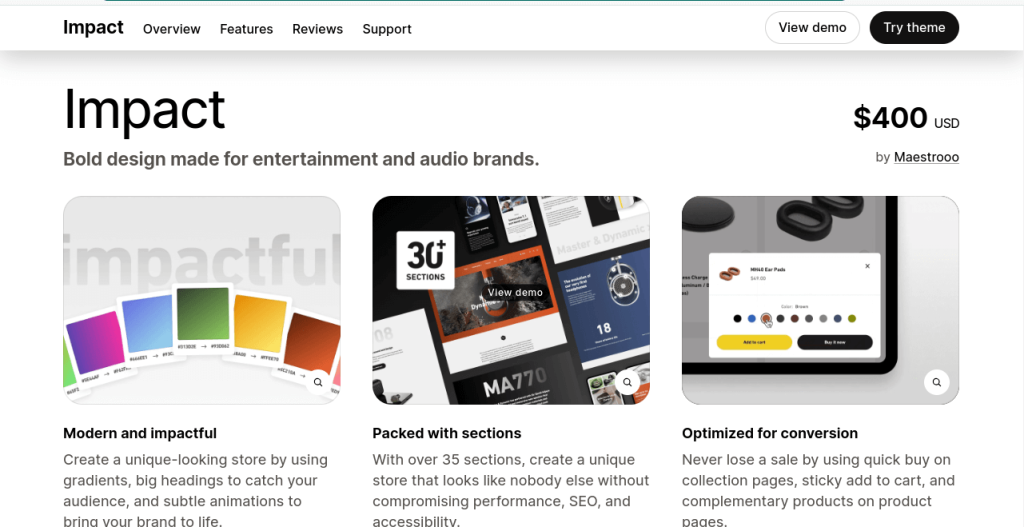
Technology retailers, electronics stores, and businesses with extensive catalogs need themes handling large inventories while maintaining visual appeal. Impact delivers both functionality and aesthetics for product-heavy operations.
Key Features:
- Over 35 customizable sections
- Advanced filtering and sorting
- Before/after image sliders
- Gradient and animation options
- Sticky add-to-cart buttons
- Press coverage showcase sections
- Trust badge displays
- EU translation support
Perfect For: Technology companies, home decor brands, stores with extensive product ranges
Pricing: Premium theme (around $380)
Why It Works: Impact balances complexity with usability. The extensive filtering helps customers navigate large catalogs without frustration, while the visual enhancements keep pages engaging despite product density. The theme includes conversion-focused features like trust badges and press sections that build credibility with cautious shoppers.
The Catch: Setup requires investment understanding all available sections and options. Rushed implementations might not leverage Impact’s full capabilities, wasting the premium investment.
11. Refresh – Modern Simplicity Evolved
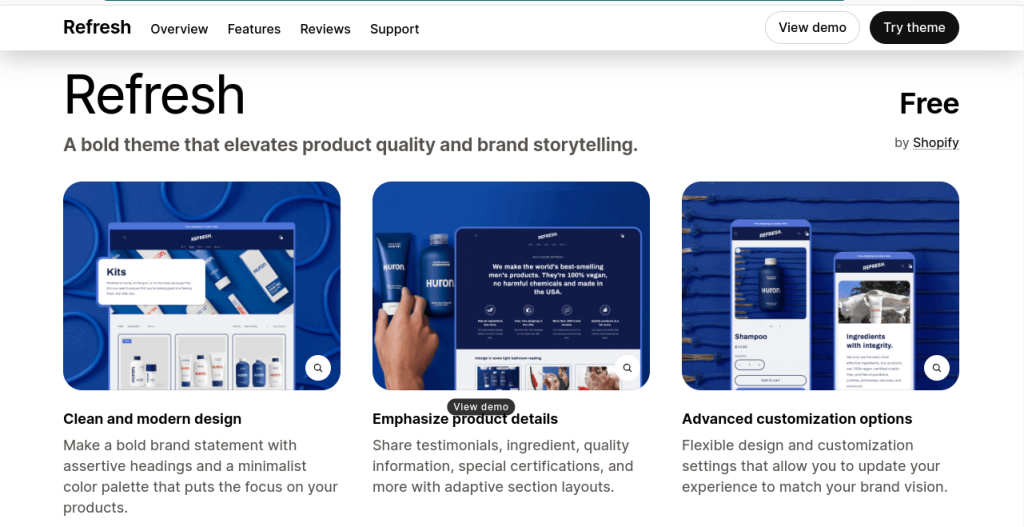
Refresh represents the evolution of free Shopify themes, offering modern features and clean design without cost barriers. The theme ranks as the third most popular choice, used by 4.3% of stores according to WebFX statistics.
Key Features:
- Contemporary design aesthetic
- Product quick view functionality
- Promotional countdown timers
- Mega menu for complex navigation
- Video support throughout
- Product filtering capabilities
- Mobile-optimized checkout flow
Perfect For: Modern brands across categories, businesses wanting current design trends, budget-conscious entrepreneurs
Pricing: Free
Why It Works: Refresh proves free themes can compete with premium options in both features and aesthetics. The modern design feels current rather than dated, and the included features rival paid alternatives. Quick view functionality particularly improves user experience by letting customers preview products without leaving collection pages.
The Catch: While feature-rich for a free option, Refresh lacks some advanced customization capabilities found in premium themes. Businesses with very specific design requirements might hit limitations.
12. Craft – Artisan and Handmade Specialist
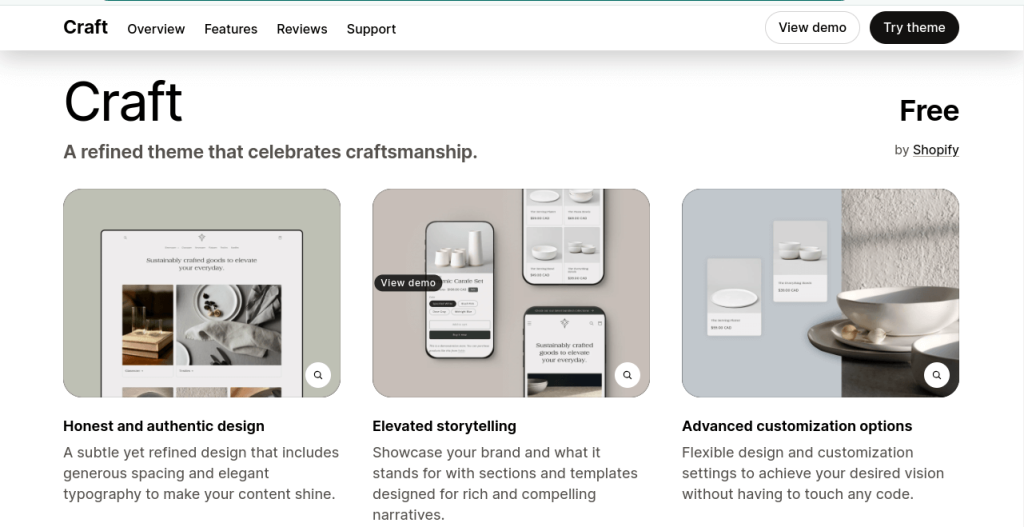
Handmade goods, artisan products, and craft-focused businesses need themes communicating authenticity and craftsmanship. Craft specifically targets this market with design elements emphasizing the human touch behind products.
Key Features:
- Storytelling-focused layouts
- Collection highlights for featured items
- Creator profile sections
- Image galleries showcasing process
- Responsive across all devices
- Product categorization by maker
- Video integration for process demonstrations
Perfect For: Handmade goods, artisan products, craft marketplaces, local maker collectives
Pricing: Free
Why It Works: Craft understands that handmade product customers buy stories as much as items. The theme provides structures highlighting maker backgrounds, creation processes, and the care invested in each piece. This narrative approach justifies premium pricing by emphasizing uniqueness and quality over mass production.
The Catch: The artisan focus means businesses selling manufactured goods might find the aesthetic misaligned with their brand positioning.
13. Ride – Adventure and Outdoor Brand Energy
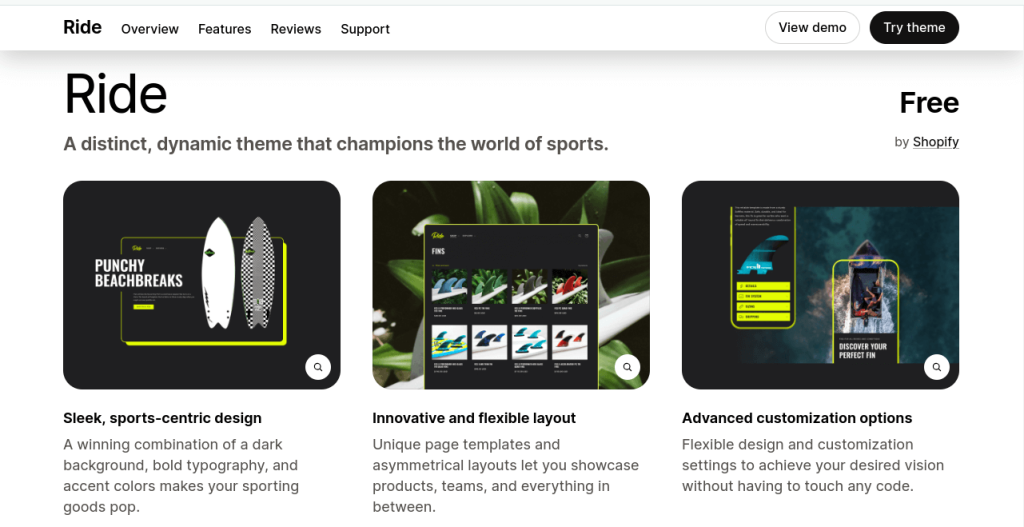
Outdoor brands, adventure gear retailers, and active lifestyle companies need themes matching their energetic positioning. Ride delivers bold visuals and dynamic layouts perfect for products used in action.
Key Features:
- Full-width images for dramatic impact
- Video backgrounds creating atmosphere
- Product filtering for technical specifications
- Size guide integration
- Instagram feed embedding
- Promotional banner sections
- Mobile-responsive adventure aesthetic
Perfect For: Outdoor gear, sporting goods, adventure travel, active lifestyle brands
Pricing: Free
Why It Works: Ride captures the energy and excitement of outdoor activities through bold design choices. The theme works particularly well for businesses whose products enable adventures, with layouts that inspire customers imagining themselves using items in dramatic settings. The technical product filtering helps customers find gear matching their specific needs.
The Catch: The bold, adventurous aesthetic doesn’t translate well to other industries. Fashion boutiques or beauty brands would find the energy level mismatched with their positioning.
The Catch: The fashion focus means features specific to other industries might require additional apps or customization to implement effectively.
Choosing Between Free Shopify Themes and Premium Options
The free versus premium decision frequently paralyzes new store owners. Understanding when each category makes sense saves money and headaches.
Start with Free When:
- You’re validating a business idea before major investment
- Your catalog remains relatively small (under 100 products)
- Standard features meet your needs without extensive customization
- Budget limitations require allocating resources to inventory and marketing
- You’re comfortable with common design patterns
Invest in Premium When:
- You’ve validated demand and are scaling operations
- Built-in conversion features would replace multiple paid apps
- Your brand requires specific aesthetic or functional requirements
- Large catalogs need advanced filtering and navigation
- Competition in your niche makes differentiation critical
The cost difference matters less than matching theme capabilities to actual business needs. A free theme powering a focused, well-marketed store outperforms an expensive premium theme on a confused, poorly-positioned site every time.
Special Considerations for Shopify Themes for Dropshipping
Dropshipping operations face unique challenges requiring specific theme characteristics. Unlike traditional retailers photographing their own inventory, dropshippers work with supplier images and rapidly changing product catalogs.
The ideal shopify themes for dropshipping prioritize speed, simplicity, and easy product management. Quick import processes matter when you’re testing products or adding trending items rapidly. Clean, straightforward layouts work well since you’re often competing on price rather than premium branding.
Many successful dropshippers build stores using Dawn or Debut as foundations, customizing slightly for brand identity while maintaining the simplicity supporting rapid product additions. The minimal approach prevents visual clutter when working with varying image quality from different suppliers.
Integration capabilities become critical. Your theme must work seamlessly with product importers and automation tools powering dropshipping operations. Before committing to any theme, verify compatibility with essential apps in your technology stack.
Speed optimization matters even more for dropshipping since you’re competing directly with marketplaces where customers expect instant loading. A fast theme helps level the playing field, reducing bounce rates from impatient visitors.
Fashion-Specific Considerations: Shopify Themes for Fashion Stores
Fashion retailers represent the largest vertical on Shopify, with over 540,000 apparel stores according to Store Leads data. This competitive landscape makes theme selection particularly critical for standing out.
Fashion-focused themes prioritize visual storytelling through large, high-quality images. Lookbook functionality showing products styled together helps customers envision outfits rather than individual pieces. Quick view features let shoppers browse rapidly, matching how people actually shop for clothing.
Seasonal collection launches drive fashion retail, requiring themes supporting promotional banners and featured product sections. Size guides need integration for reducing returns. Color and size variant displays must be clear and intuitive.
Mobile optimization becomes especially critical since fashion shoppers frequently browse Instagram, see products they like, and click through to stores on their phones. The entire mobile experience, from browsing to checkout, must feel smooth and natural.
Brooklyn, Prestige, and Studio each offer different approaches to fashion retail. Brooklyn provides flexibility and practical features. Prestige targets luxury positioning. Studio serves creative, artisan fashion. Matching theme choice to your specific fashion positioning determines success.
Making Your Final Theme Decision
After reviewing options, making your final choice requires balancing multiple factors:
Start by defining your must-have features. Create a list of absolutely necessary functionality versus nice-to-have additions. This clarity prevents getting swayed by features you’ll never actually use.
Test thoroughly before committing. Most premium themes offer preview capabilities. Spend significant time clicking through demos, testing on mobile devices, and imagining your actual products in the layouts. Rushed decisions often lead to expensive regrets.
Consider long-term scalability. Choose themes growing with your business rather than requiring replacement as you expand. Switching themes later disrupts operations and potentially hurts search rankings temporarily.
Check update frequency. Themes maintained actively by developers stay compatible with Shopify platform updates and new features. Review change logs seeing how often themes receive updates and improvements.
Read actual user reviews. Look beyond ratings to specific feedback about setup challenges, support responsiveness, and real-world performance. Other merchants provide valuable insights about living with themes daily.
Factor in your technical comfort level. Honest assessment of your abilities helps avoid choosing themes requiring skills you don’t possess. Beautiful, complex themes become frustrations without proper expertise to customize them.
Your Theme Choice Matters, But It Doesn’t Define Success
Selecting among the best Shopify themes represents an important decision impacting your store’s performance, but it doesn’t determine business success alone. A perfectly optimized theme on a poorly positioned store with weak products still fails. Conversely, a basic free theme supporting a well-marketed, differentiated business with great products thrives.
Use this guide to narrow options matching your specific situation. Consider your budget realistically, evaluate which features actually matter for your products, and test potential choices thoroughly. Remember that 98.5% of successful Shopify stores use pre-built themes rather than expensive custom development, and many profitable businesses operate on completely free options.
Once you select a theme, focus energy on activities directly driving sales: understanding your target customers, creating compelling product descriptions, photographing items beautifully, building effective marketing campaigns, and providing exceptional customer service. These factors determine business success far more than whether you choose a free or $450 premium theme.
That combination of smart theme selection plus excellent execution creates successful online retail businesses regardless of which specific option you choose from this list of best Shopify themes.
Frequently Asked Questions
Yes, you can change your Shopify theme at any time without losing your products, customer data, or order history. Shopify stores all your content separately from the theme, so switching is relatively straightforward. However, keep in mind that changing themes may require reconfiguring some settings, customizations, and app integrations. It’s recommended to preview the new theme thoroughly and test it on a duplicate store before making it live. Some merchants experience temporary SEO fluctuations after theme changes, so plan switches carefully and avoid frequent changes. Most successful store owners start with a free theme and upgrade to premium options once they’ve validated their business model and understand their specific needs.
Customizations don’t transfer between themes. Products, collections, and customer data remain intact, but visual customizations, sections, and theme-specific settings need recreating in the new theme. Keep your old theme installed to reference previous settings if needed.
Free Shopify themes can be used on unlimited stores without restrictions. Premium themes from the official store are typically licensed for single-store use, requiring repurchase for additional stores. Some third-party developers offer multi-store licenses at higher prices. Always check licensing terms before purchasing if operating multiple stores. Violating license terms can result in support denial and legal issues.
Update your theme whenever developers release new versions, typically every few months. Updates include security patches, performance improvements, compatibility fixes, and bug resolutions. Shopify notifies you when updates are available. Before updating, review the changelog and consider testing on a duplicate store if you’ve made extensive customizations. Keeping themes updated is crucial for security, compatibility with new features, and performance enhancements.
No. All recommended themes are responsive and automatically adapt to different screen sizes. A single theme provides optimized experiences across smartphones, tablets, and desktops. Always test themes on actual mobile devices since responsive quality varies.
Yes. Modern themes offer extensive customization through drag-and-drop visual editors. You can change colors, fonts, layouts, sections, and images without coding. Deep customizations like new functionality or checkout modifications require coding knowledge or hiring a developer.
Premium themes from the official store are one-time purchases with no recurring fees. Free themes remain free forever. You receive updates as long as developers maintain the theme. Some developers offer optional paid support separately.

