
Quantity discount is a pricing strategy that has long been common in wholesale and B2B sales.
But today, many e-commerce brands from all business models have taken a step further by using it to increase order value. For example, a product may cost $10 per unit but drop to $8 per unit when a customer buys 3 or 4 more units of the same variation.
In this guide, you will learn what quantity discount is, how it works in real scenarios with both B2B and B2C brands, and best practices to help you apply this strategy while protecting your profit margins.
Table of contents
Quantity discount: What is it?
Quantity discount, or volume discount, is a pricing strategy in which the price per unit decreases as the quantity purchased increases. In simple terms, the more a customer buys, the less they pay for each item.
Businesses use quantity discounts for several reasons. First, they take advantage of economies of scale, which means a lower cost per unit as production or order size increases. On the one hand, you increase your average order value. On the other hand, your customers save more per unit when they buy in larger quantities.
Second, quantity discount allows you to move inventory faster, which is especially helpful for seasonal products. Selling in larger quantities can also lower handling and shipping costs per unit. As a result, your overall operations become more efficient.
Different types of quantity discounts
In practice, there are many ways merchants use to offer quantity discounts. That’s why some of these terms are often used interchangeably, even though each one works a little differently:
| How it works | Use case example | |
| Tiered discount | The discount price increases for each quantity range. | Buy 1 to 9 items at $10 each, 10 to 49 at $9, 50+ at $8. |
| Volume bracket pricing | A fixed price is applied to each quantity range. | Buy 1 to 10 items for $100 total, 11 to 20 for $180 total. |
| Package pricing | Items are sold together as a bundle at a lower total price. | Buy a pack of 3 items for $25 instead of $30 individually. |
You will come across many terms. Most of them describe the same idea, just with slight differences in how the discount works.
Real-life examples of quantity discounts
Both B2B and B2C businesses use quantity discounts. While the structure may vary, the goal is the same: encourage customers to buy more by offering better value per unit.
B2B example: Wholesale pricing
In a B2B scenario, suppliers often use quantity discounts as wholesale pricing to reward bulk orders from retailers.
For example, a supplier may price a product at $12 per unit for small orders. However, if a retailer orders 500 units or more, the price may drop to $9 per unit. Let’s look at a wholesale site called Bags in Bulk.
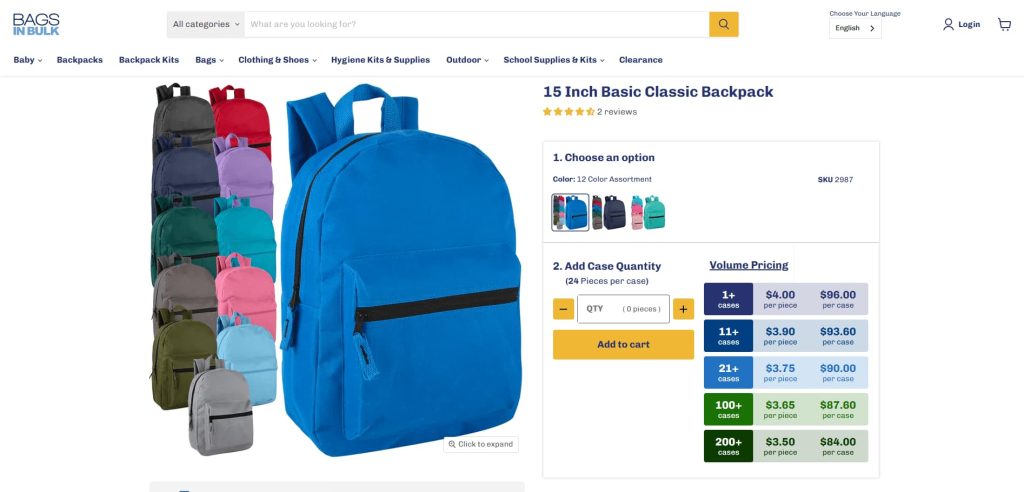
A backpack costs $4 per piece. If customers decide to buy more than 21 pieces, the price will be reduced to $3.75. This helps suppliers move large volumes faster, while retailers get lower costs and better margins when reselling.
Traditionally, many businesses manage these pricing rules using systems like Microsoft Dynamics 365 Commerce or Magento, where quantity-based pricing can be set for different customer groups and order sizes.
However, these systems are not beginner-friendly. They often require technical knowledge, along with high setup and maintenance costs. The front-end experience tends to be poor, too. This is one of the reasons why the industry has a reputation for being overly complex and hard to use.
B2C example: Mix-and-match combo
After Costco begins offering bulk discounts on everyday products, many merchants realize that the potential of quantity discounts extends beyond the B2B industry.
There are many ways to get creative with quantity discounts in the field of B2C. One popular approach is the mix-and-match combo, where customers can choose different items and still qualify for a discount when they reach a certain quantity.
For example, a pet store sells a $10 bag of dog food in flavors like beef, chicken, fish, and pork. With a mix-and-match quantity discount, they can encourage customers to buy more and try new flavors with promotions like:
- Buy any 3 items for $25
- Buy any 5 items for $30
And this is how Real Life Catholic, one of the many innovative merchants, is doing it.
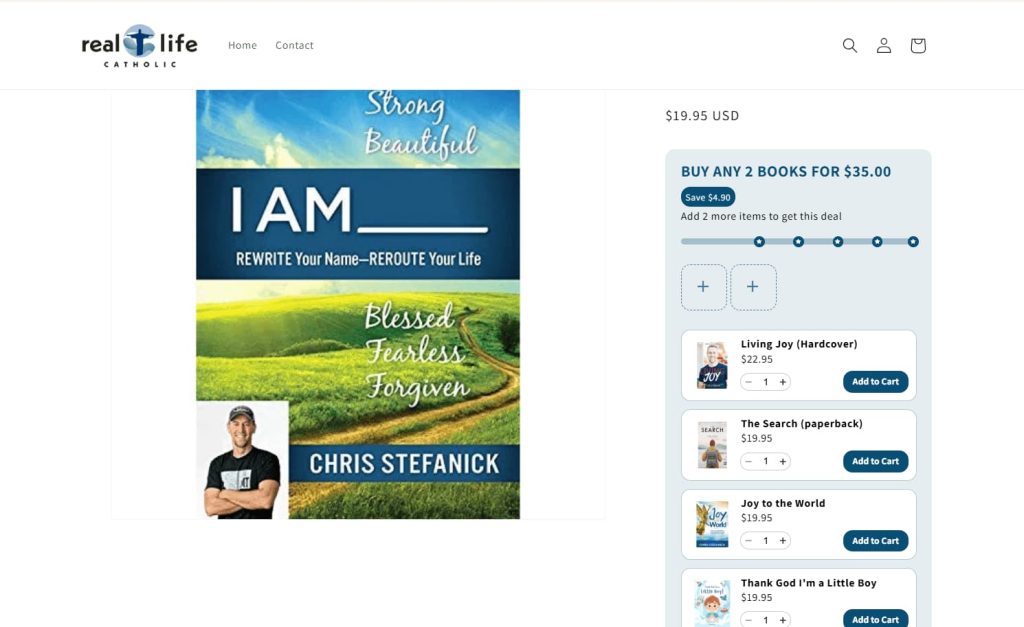
A book costs $19.95. Through a mix-and-match combo, customers can choose any other titles and still qualify for a discount when they buy multiple items, such as buying 2 books for $35.
It’s a win-win situation. Customers get better value and more variety, while the business increases order size and gets people to explore what it has to offer.
As this new wave of ecommerce innovation emerges, merchants need a quicker way to set their quantity discount up and running. That’s why Shopify offers simple tools and apps that make it easy to create and test these volume pricing strategies without any technical complexity.
Best practices for ecommerce quantity discounts
Offering quantity discounts is not just about lowering prices. To make them effective, there are a few simple tips to keep in mind.
Use clear pricing tiers
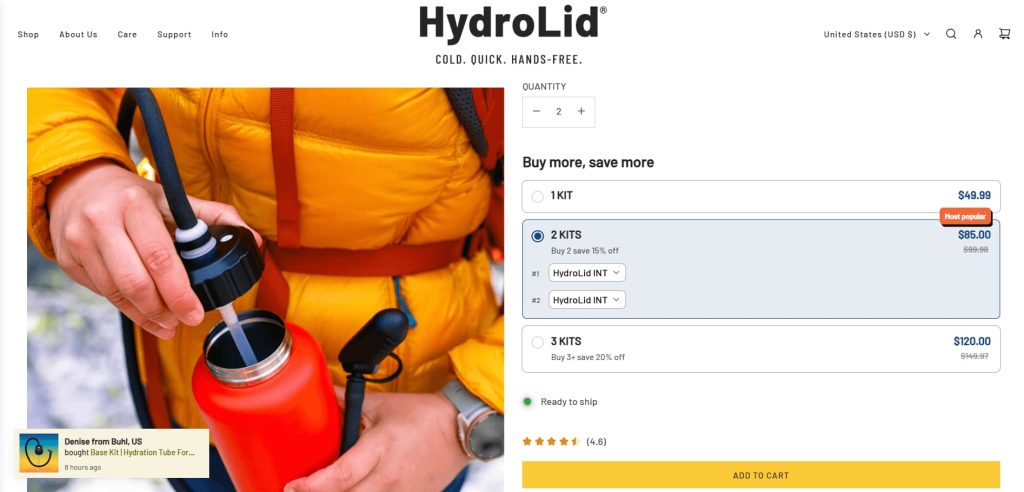
Keep your pricing structure simple and easy to understand. Most stores perform best with 2–4 tiers. If you add too many levels, customers may feel confused or overwhelmed.
For example:
- Buy 1–2 items: $10 each
- Buy 3–5 items: $9 each
- Buy 6+ items: $8 each
A clear structure helps customers quickly see how much they can save.
Highlight savings visually
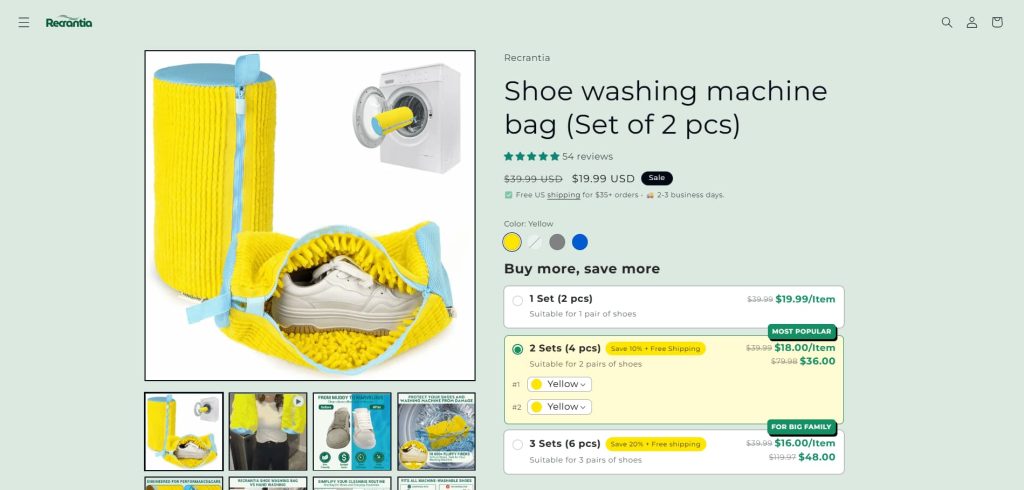
Make sure customers can easily spot the value of buying more. Show the savings directly on the product page, not just in the cart.
You can highlight:
- “Save 10% + Free Shipping”
- “Most popular” labels on higher tiers
This makes the benefit obvious and encourages larger orders.
Test and optimize
Not every pricing tier will perform the same. Test different setups to find what works best for your store.
You can experiment with:
- Number of tiers
- Discount percentages
- Minimum quantity thresholds
Track metrics like average order value and conversion rate. Over time, small changes can lead to better results.
Final words
Quantity discounts are a simple but powerful way to encourage customers to buy more while offering better value per unit.
As you’ve seen, they can be applied in many forms: From wholesale pricing in B2B to mix-and-match offers in ecommerce.
The key is to keep your pricing clear, align it with your margins, and present it in a way that customers can easily understand. With the right setup, quantity discounts not only increase average order value but also improve the overall shopping experience.
Start simple, test different approaches, and refine your strategy over time.

